
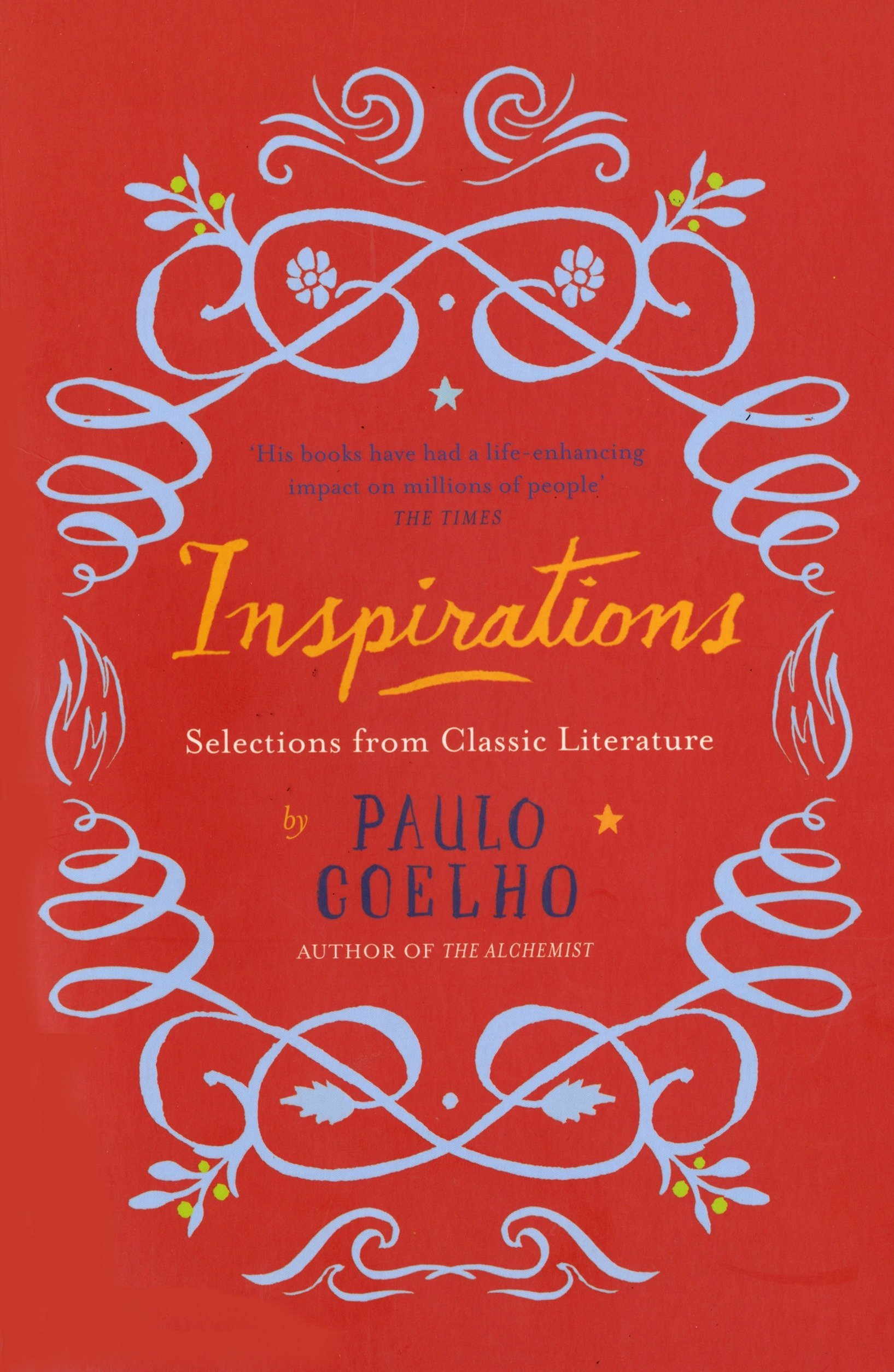
I would like to introduce a book from the author of Alchemist which is a collection of selections from classical literature. The collections are arranged in four sections – water, earth air and fire. It is a collection of extracts from classic books that have inspired him. The works are as diverse as The Art of War, Lady Chatterley’s Lover and Frankenstein. Paulo Coelho talks about the way he received a book from his friend when he was getting ready to compile this book. The title of the book was 'The Book' by Jorge Luis Borges and it was written after Borges lost his vision. Coelho describes the style of writing in the book as conversational and he further adds that ‘the text had the fluidity and closeness of a talk’ Borges also describes the importance of the spoken word and how the ancients did not revere the book – the written word. They had this feeling that the written word ‘imprisoned the spirit’ of the oral teachings.
Most of the great teachers of antiquity never wrote a single word. The teachings of Buddha, Pythagoras, Socrates or Lao Tzu were all oral. The sacred books in the written form became extensions of memory. The Ten Commandments was inscribed to make the human beings understand the divine stipulations. The written word enables us to remember and at the same time, it perpetuates the loss of memory. Just like Emerson who believed that a library was a magic cabinet and in books, we find the best demonstrations of the human spirit but to bring them to life we need to open the books and read them. Paulo Coelho is attempting to compel his readers to go to their magic cabinets and re-awaken their imagination. The collection or anthology has gems like the ‘Hymns to Agni, God of the Sacrifice’ - Rig Veda, from Bhagavad Gita, and Rabindranath Tagore’s selected poems – Brahma, Visnu and Siva.

No comments:
Post a Comment