

Monday, 7 November 2011
Book Review - Under the Dome by Stephen King

Friday, 21 October 2011
Steve Job's Stanford speech, a rough summary
The speech is divided into three parts. The first part is titled as connecting the dots. This is all about listening to your heart and following your heart. Even though Steve never graduated from college he learned certain things like calligraphy because he was interested in that subject. It was many years later that this particular field of study became useful. I.e when they were developing the font for apple computers. The second part is named as love and loss. He is defining the basic philosophy of his life. To do something that you love. Even though he was thrown outside apple due to some disagreements he was at heart a silicon valley fellow. He continued doing what he liked the most and that is why he was able to build Next computers and Pixar animation studios. The third and final part of his speech is about death. He is making fun of people who wants to go to heaven but who doesn't like to die. He is worried about time. He says that when he was diagnosed with cancer he knew that his time was running short and that made him more productive. He ends the last part of his speech by talking about a college magazine and its final issue. The parting words from editors of the magazine was - Stay Hungry and Stay Foolish.
- Posted using BlogPress from my iPad
Friday, 14 October 2011
Writing – Jeremy Harmer
This blog is based on my review of a chapter 18 in The Practice 0f English Language Teaching by Jeremy Harmer, 3rd Edition. The chapter discusses the language skill of writing in detail.
The chapter begins with a discussion on handwriting and the importance of the same in the case of students whose ‘native-language orthography’ is different from English. He also remarks that the handwriting is a personal issue and striving for an uniform style is not desirable. The final outcome should be legible and readable. The advent of technology has greatly reduced the importance of the written texts, but still it is useful in academic and personal fields.
Spelling is another area where special care should be given to our students. They should be taught the differences in spelling as they occur in American and British English. Bad spellings always is ‘perceived as a lack of education or care’. Internet users are infamously famous for their habit of breaking the spelling rules.
The next section discusses the idea of reviewing. I am pretty excited about this section since there are two important sub sections which clearly gives the big picture about reviewing writing. The first one talks about the steps involved in reviewing.
- Check Language Use ( Grammar, Vocabulary, Linkers).
- Check Punctuation and Layout.
- Check Your Spelling.
- Check your writing for unnecessary repetition of words and/ or information.
- Decide on the information for each paragraph, and the order the paragraphs should go in.
- Note down various ideas.
- Select the best ideas for inclusion.
- Write a clean copy of the corrected version.
- Write out a rough version.
The correct order for these steps will be 6, 7, 5, 9, 1 , 2 , 3, 4, and finally 8
Jeremy Harmer also discusses the Arndt’s model based on the Rom White and Valarie Arndt idea of revision. According to them ‘writing is rewriting; that re-writing – seeing with new eyes – has a central role to play in the act of creating a text. The same idea is shown in the picture below:

In the next section Jeremy Harmer discusses the different types of writing such as
- Product writing: The written work is seen as the ultimate aim. Little attention is given to the steps involved in writing. This is recommended in situations where the instructor is hard-pressed for time.
- Process writing: The above model can be taken as the best example of process writing. There is lots of brainstorming and idea collection that happens in this type of writing.
- Genre writing: Kind of similar to process writing. The students are given pre-training in the genre that they are attempting to write. If the task is to write an obituary there are asked to read different types of obituaries that appeared in the media. They are asked to create a list of words that commonly appear in the genre.
- Creative writing: This type of writing concentrates on the creative tasks such as poetry, novels and short stories.
- Co-operative writing: This gives a chance for greater discussion and peer correction. ‘The generation of ideas is frequently more lively with two or more involved than it is when writers work on their own’. Writing in this case becomes a group activity.
- Computer based writing: This type of writing is based on the word-processor software. The students feels relaxed and motivated because handwriting and spelling can never be bad when using a word processor. The students also gets a chance to send emails to each other in the class or to somebody who is away. This will happen under the strict supervision of the teacher. This email communication may also lead to the formation of mouse pals instead of pen pals.
Role of a teacher in a writing class
- Motivator: Motivate the slow learners. To give the students some cues and hints to kick start their writing process.
- Resource: The teacher should be quite resourceful by ‘supplying info0rmation and language’
- Feedback provider: Teachers should respond in a positive and encouraging way to the content what the students have written.
Wednesday, 14 September 2011
Creative Writing - A Beginners Note
Any writing that goes outside the bounds of normal professional, journalistic, academic and technical forms of writings. Novels, epics, short stories, poems, Screen writing and play writing also falls into the category of Creative Writing. Creative writing is also treated as a study program which trains individuals to perfect their skills in writing. Creative writing is a more contemporary and process oriented name for what has been known as literature. Creative writing is believed to focus on student’s self-expression. Creative writing has evolved into a discrete discipline now offered through BFA’s (Bachelor of Fine Arts) and MFA’s (Master of Fine Arts). The courses are kind of bridge between the artistic pursuits and academic study. Creative writing students are encouraged to get involved in extra-curricular writing based activities such as publishing clubs, school based literary magazines or newspapers, writing contests, writing colonies or conventions and extended educational classes. Creative writing is taught in a workshop format rather than seminar style. Some notable terms that crop up in these sessions are – peer critique, format, re-writing, editing, structural techniques, genres, idea generating, unblocking the writer’s block. There are two main arguments supporting creative writing as an academic program
1) It helps to improve the writing skills of learners.
2) It also enables an in-depth study of literary terms and mechanisms that can be applied. (Instead of learning about the literary terms it is be better to use the same in creative adventures of our own.)
Some academicians feel that creative reading should go hand in hand with creative writing. The former gives the necessary boost to the writer. Creative writing makes us wake up. Creative Writing is easy. All you do is stare at a blank sheet of paper until drops of blood from your forehead. Creative writing is a kind of writing that uses language in imaginative and bold ways. Creative writing falls into two main categories fiction and non – fiction. Fiction is writing that tells about made-up events and characters. Novels and short stories are examples of fiction. Fiction that contains imaginary situations and characters that are very similar to real life is called realistic fiction. Nonfiction is a type of writing about real people and events. Essays, biographies, autobiographies and articles are all examples of nonfiction.
Sunday, 11 September 2011
Writing - A Scientific approach
Writing is a method of communication. Writing is speaking to others on a paper or on a computer screen. Writing is a kind of output which results from voracious reading, long experience or maturity. Writing provides self-satisfaction and boosts ones confidence. The one motto that matters when it comes to writing is – Practice maketh perfect. Writing becomes a necessary communicative tool which students use to organize thoughts to effectively convey to a specific audience.
The steps that we should follow in writing are
- Pre- writing - Ss generate their own thoughts.
- Composing – The art of writing the first draft.
- Editing – Reviewing and polishing the first draft.
Good writers always think about the following:
- What does the writing look like? ( Form)
- Who will read my writing? ( Audience)
- What is the writing about? ( Topic)
- Why am I Writing ( Purpose)
Types of writing based on the content and style:
Narrative writing – Basically a story, it introduces the Wh’s of setting like – Who, Why, Where, When) - http://en.wikipedia.org/wiki/Narrative
Descriptive writing – Basically essay writing, it introduces the sensory perception into the act of the writing. The style is often prosaic. - http://en.wikipedia.org/wiki/Essay
Informative Writing - Deals with only one subject. Can be more technical in nature and it has some elements of an essay. http://www.hi.com.au/engproj/pdf/HEPEveryday.pdf
Technical Writing - This type deals exclusively with facts and technology. It is writing stripped of its sensory and narrative beauty. This is for the serious minded. The technical writers are known as API writers also. API stands for (Application programming interface)
Wednesday, 31 August 2011
Writing - A Brief Review
 |
| Writing in the new Era |
Inspired by the book that I am reading now - The Big Book Shelf by Sunil Sethi
This blog attempts to capture the word writing in its various forms. Whether it is the cave paintings of Altamira or the writings of a literary mind, the act of writing is essentially an act of self-expression. The poets in the Royal court houses often wrote to appease their Lordships and Highnesses. Shakespeare often wrote his plays for the English Royal class. They were the ones who funded his projects and sponsored his so called ‘idea-hunting jaunts’. Same was the case with Marlowe and other poets and dramatists. Writers often became the chroniclers or keepers of time. They could mummify the ‘zeitgeist’ in their writings. Thus most of Shakespearean works are textbooks of history and anthropology. Maybe for Shakespeare, his works were just acts of literary celebration. He never would have intended his writings to be treated as historical log books. Just as the proud and excited cave painter of Altamira who drew his hunting exploits on the cave wall, Shakespeare enjoyed his acts of creation.
Writing was an essential part of the schools of thoughts in Ancient Greece and Rome. The grammar schools were training grounds for compositions and translations. The training was grueling and the scribes were given an official status upon the successful completion of learning. Some of them even travelled with the Kings and Emperors to record events of war and achievements. They were the real journalists who got embedded in the annals of history. Plato and Aristotle recorded most of their teachings as writings. The teachings were given in the oral form and their disciples would painstakingly copy them into the written form. With the spread of Christianity, Religious writings became a popular form of writing. Mostly limited to Bible translations and recording the exploits of Saints, these writings gave us the picture about the life inside a monastery or a nunnery. Christian faith leaders traveled widely and they used to record their daily events in a log book. These log books can be considered as the precursor to the branch of travel writing. Some of them even travelled to the Holy Land with the crusaders to capture the religious action. Textbooks and Dictionaries ruled the roost during the classical age. Dr. Johnson compiled the dictionary thus giving a new meaning to the word - Lexicography. The rebellious romantic age that followed was lost in the writings worshipping Nature and inanimate things. The genres of writing namely - Fiction, nonfiction, short-story, drama, poetry, essay ( Prose) became widely popular and there was a wide spread interest in arts and humanities.
In todays world writing is a carefully studied art. There are literary clubs and book clubs to promote the latest trends in literature. Most of the writing done today is for the media. The Radio, Television, Cinema and the Internet dominate the scene. The birth of Journalism ( The fourth estate) led to the new type of writings like features, columns, opinion, snippets, etc.
Writing is also accorded an academic status with Academic writing being taught in many colleges and universities. Universities and Colleges offer courses in creative writing and an MFA degree is seen as a systematic way of mastering the art of writing. There are online versions of writing courses which has led to the mass production of words in the written form. The two types of writing namely - Process and Product writing has gained much popularity among scholars and teachers alike. The Internet offers new avenues for writing such as blogging, micro blogging and even content writing for websites. On a serious note writing is also being used in health industry and tourism industry. In the former writing as seen as a form of therapy for curing the metal burden of trauma patients and in the latter it is seen as a tool to create a verbal description of exotic places and events.
Monday, 29 August 2011
The Mute Boy and the Tattooed Girl - Character Study
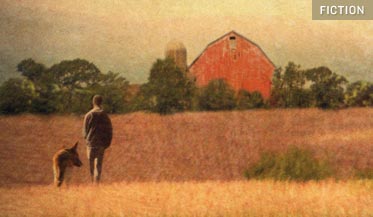
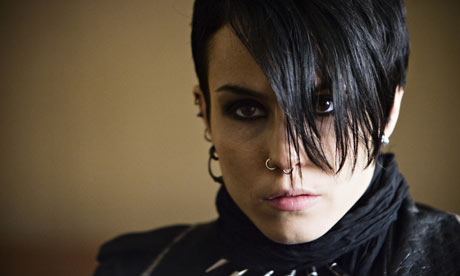
One character lives in one book whereas the other lives in a trilogy. The two characters that feature in these two books - Edgar Sawtelle in ‘The Story of Edgar Sawtelle’ by David Wroblewski and Lisabeth Salander in the Steig Larsson’s - Millennium trilogy (The Girl with the Dragon Tattoo, The Girl who played with Fire and The Girl who kicked the Hornet’s Nest).
These four books introduced me to the new habit of reading books using my Ipad. This blog is an attempt to define the character of these two literary beings. I have divided this character study into three segments,
- A brief character profile.
- Titular hero status.
- Overlapping traits.
The Story of Edgar Sawtelle:
Edgar Sawtelle is a story set amidst the world of dog breeding. The story is replete with terminologies related to dog breeding. Sawtelle is the name of the fictional breed of dogs that figure prominently in the book. Edgar is a mute boy and he is happy to live with his father and mother until the death of his father under suspicious circumstances. The death happens soon after the arrival of his paternal uncle who was leading an estranged life. Edgar has his own suspicions about his father’s death and is uneasy about the presence of his uncle at home and near his mother. Edgar decides to leave home and Almondine, his pet dog and embarks on a journey to the neighboring woods with three puppies. His life in the wild is portrayed in all its grandeur. His wanderings and the events are described in great detail. After a few weeks of wandering Edgar decides to return home and face his father’s killer and the woman who was once his mother. He faces his destiny in the fire engulfed Sawtelle kennel.
The Tale of Lisabeth Salander
Lisabeth is a young woman who possess a great knowledge about computers and the Internet. She uses modern gadgets like a iBook and the hacking software Asphyxia ( maybe fictional). She is an employee of Milton Security Agency. She appears in the first book - ‘The Girl with the Dragon Tattoo’ and works as an assistant to Blomkvist , a journalist who is assigned with a private investigation by the head of a rich family in Sweden. She helps him by digging information about his clients and at one point even saving him from the clutches of a sadistic sex pervert. In the second book she is after her father Zalenokov who had tortured her mother and had made her childhood a mess by putting her in the mental asylum. In this book titled - ‘The Girl Who Played with the Fire’ she is not with Blomkvist and she has amassed a fortune. The story ends with the death of her father and her subsequent hospitalization. The third book opens with the preparation for Lisabeth Salander’s trial. The concluding part of the trilogy titled ‘The Girl who Kicked the Hornet’s Nest’ reveals to the reader Salander’s true identity and how she comes out of the courthouse a winner after burying her horrid past.
Titular Hero Status:
It is the boy versus the girl. The mute boy is Edgar Sawtelle and the tattooed girl is Lisabeth. Both of them are the titular heroes in their respective literary worlds. The stories revolves around them and they are the ones who take the fictional action forward. The authors have invested their time and energy to delineate them. Edgar has got a problem and he is bent on finding a solution to the same. His trip to the wilderness gives him a chance to explore his mind and take a decision. Lisabeth is quite capable of doing things in her own way and nothing can stop her from that.
Character Overlapping:
When I compared these two characters I found the following common traits in them:
- Loneliness ( Solitude): Both the characters can be found searching for a lonely space in this world. They are not that social and are mostly inwardly in their pursuits. For Edgar, maybe his muteness is a reason and for Lisabeth Salander it is her troubled childhood. They spend time in solitude but emerge from this brief isolation, stronger and more determined about their causes. Edgar’s wild trip and Salander’s foreign trip are illustrations for this.
- Silence: They don’t speak much. For Edgar, this gives him more opportunity to see and hear more. Lisabeth is an introvert. The only person to whom she has opened her heart is her lesbian friend Minnie and to some extent she has reveled her inner thoughts to Blomkvist.
- Exploring / Adventurous: Both the characters are keen on adventure and they are risk takers. Edgar takes a great risk when he ventures out into the wilderness with no food and proper clothes accompanied by three yearling dogs. Salander takes on the mighty Swedish government using hacking tools and her network of hackers.
- Independent: Salander and Edgar are strong willed independent characters. They make their own decisions and carry on with the act of chasing their own destinies.
Friday, 26 August 2011
Utopia vs Dystopia
The world we live in is the world we acquire through our five sensibilities. This shapes our world view. While keeping one foot firmly in 'our' world, we tend to stretch and see the worlds beyond. The worlds that exist in the media, Internet or even a tourist brochure. The other world is always tempting and alluring. It is clean and beautiful and it is replete with limitless possibilities.
The advertisement /marketing industry has constantly exploited this yearning in human beings. A close examination of the images projected through the media bears an example to this. This kind of representation is stronger when it comes to the portrayal of real estate deals e.g A new township or a new apartment. It also resonates in ads related to detergents and dental products.
There are pockets in our world where everything resembles an utopia. They are rare and mostly inaccessible to the ordinary. In the world of words ( Literature) the perfect world is named as Utopia after the title of the novel by the same name by Thomas More in 1516. The world utopia itself has undergone many transitions during the course of human evolution. From a literary concept it became a social phenomenon.
For many centuries this 'fragment of imagination' drove the world in search of a panacea to the universal maladies. The direct off shoot of this is the branch of philosophy is titled Utopian socialism. The communist manifesto is an another attempt to define a perfect world. There were attempts to create a perfect world of fun and frolic in the form of theme parks and amusement centers. The french cultural studies critic Jean Baudrillard names this as simulacra or hyper real. He was also aware of the influence of the influence of the visual media on human minds. The Disney theme park serves a world of escapism. In a larger understanding of the word, it resembles the definition of art where the artist draws the audience into a world where they live for a momentary span of time.
Off lately I watched a classic by Clint Eastwood titled - A perfect world. The movie is about the relationship between an outlaw and his 10 year old hostage. This where the heart of the movie lies. It is also a perfect example of the dystopia (outlaw) co existing with the so called utopia ( kid). Roger Ebert examines the movie and finds the perfect one-liner to describe this relationship - The child is the father of the man. The two worlds spills over to the other and sometimes we feel that in the climax the roles are reversed.
Just like the beauty and the beast syndrome sometimes it is essential to have the co existence of the dystopian and utopian world views in our lives.
Tuesday, 9 August 2011
The New World Order - The Rise of the Unrisen
This blog is based on the recent events that happened on our planet. The events put together can be said as the foundation for a new world order which is augmented by technology and youth power. As I prepare this blog London is burning. The killing of a teenager has triggered wide spread violence and looting in many parts of the UK. The BBC and CNN were busy blabbering about the Arab Spring and the tremors felt in the middle east are now preoccupied by the stories of decadence and ruin in their own land. The point that they missed is the changing mindset of the youth irrespective of their country of origin. The elderly generation knew the value of patience but the youth of today are more pressing when it comes to needs. They need instant gratification and quick answers. The Met police in UK is dealing with a mob who wants an on the spot verdict on the teenager's death. So on one side we have the socially sensitized young citizens who can see through the flimsy tricks of the politicians and emperors. They are net savvy and use technology as a medium to socially sensitize and mobilize others in their own country and even abroad. On the other side we see the rise of the voiceless. This group were living on the seams of a metropolis and now they are striking back. They are socially ostracized and they live in the lower rungs of the social ladder. They don’t want to live as ordinary anymore they aspire for an extraordinary life.
The economy plays a large role in this new world order. The recession ghost is back and many are rendered jobless leading to more social instability. There is also the threat of money accumulating in certain individuals. The governments are rendered helpless. The myth that America will triumph forever has disintegrated.
There are also threats posed by the indigenous people of Europe and in other parts of the world. What happened Oslo is based on this feeling. The same can be said about the middle east where the Arabs are demanding more representation - words like Omanization, Kuwaitisation, Saudisization are quite common in todays world.
So I see lots of new conflicts rising everyday. It is between the young generation and elderly generation, between the rich and the poor, and between the indigenous and the settlers.
Friday, 10 June 2011
Grammar and Me
This blog captures my tryst with English grammar for the past few months. It will take into account the topics that were explained to Vocational Trainees. The sad thing about this blog is that the first version of the same was in inadvertently deleted from my PC. The lesson is learned in the hard way and now i am better equipped when it comes to preparing a blog. I am using Evernote for creating the first draft of the blog. The app is available in both my iPhone and iPad. So it is easy to sync using the Internet. There is no hassle of copying into a flash or a HDD. It simply synchronizes with the server. The updated file can be accessed in my Iphone and Ipad and even my PC. I plan to write about some of my the most common topics that are taught here. There is no in-depth analysis of language sentences or structures. The basic building blocks of language is discussed in a practical way. The grammatical items are not studied in isolation but seen in the context of their daily usage. The methodology that I have adopted is based on the premise that language is used to describe the world. If that is the case then grammar helps in the correct way of describing the world. In other words grammar helps the user of any language to speak or write in an accepted way with the other users of the same language. The methodology also takes into account the users experience with the language. The learner should have minimal competence in the language especially grammar.
The first grammatical item he or she will be introduced to will be - verbs,nouns and adjectives. Using pictures and other audio visual aids learner will get to the know the types of actions and how the actions are described using adjectives.
Tom kicked the ball swiftly - Noun + Verb + Noun + Adjective
This combination is used especially to talk about people and to describe their actions. At this stage the details of these grammatical items are not divulged. There is no references to pronouns, regular/ irregular and comparatives. These topics will introduced at a later stage.
In the next stage, the concept of prepositions is introduced - of time, of place and of movement. This will enhance the linguistic descriptive power of the learner. If the need arises, there can also be training in Numbers,mathematical register, weather and even time expressions. As a follow up to the prepositions the idea of imperatives also can be introduced. Directions and verbal walk-throughs can be arranged in such a way that there is an integrated approach towards learning. As an addition interrogatives also can be taught here as they are required to ask for directions.
Once the learner has grappled with the above mentioned topics, the next level of grammar topics can be introduced starting with comparatives, modal auxiliaries, abilities and possibilities, some tense items like - present continuous and future ( using will and going to). These topics will reinforce what he or she has learned and will give a better understanding of English Grammar. Once these stage is achieved then new can slowly moved towards analysis of single sentences and then on to complex paragraphs. It will be more like a poetry appreciation class, where the learner is asked to jot down the grammatical items that he can identify in the text. These textual dissections calls for a large amount of discussions and debates and the use of a standard reference book for consultation.
Grammar teaching can be made quite interesting by using various audio visual aids. The first foremost aid is the dictionary either in the soft copy of hard copy format. Then the use of language softwares like Face to Face and Language in Use. There are also several podcasts available from the BBC like Grammar challenge. There is also a useful podcast by the name Grammar girl.
Thus Grammar learning is never a boring thing. It can be made interesting and result oriented. The methodology or the approach matters a lot.
- Posted using BlogPress from my iPad
The first grammatical item he or she will be introduced to will be - verbs,nouns and adjectives. Using pictures and other audio visual aids learner will get to the know the types of actions and how the actions are described using adjectives.
Tom kicked the ball swiftly - Noun + Verb + Noun + Adjective
This combination is used especially to talk about people and to describe their actions. At this stage the details of these grammatical items are not divulged. There is no references to pronouns, regular/ irregular and comparatives. These topics will introduced at a later stage.
In the next stage, the concept of prepositions is introduced - of time, of place and of movement. This will enhance the linguistic descriptive power of the learner. If the need arises, there can also be training in Numbers,mathematical register, weather and even time expressions. As a follow up to the prepositions the idea of imperatives also can be introduced. Directions and verbal walk-throughs can be arranged in such a way that there is an integrated approach towards learning. As an addition interrogatives also can be taught here as they are required to ask for directions.
Once the learner has grappled with the above mentioned topics, the next level of grammar topics can be introduced starting with comparatives, modal auxiliaries, abilities and possibilities, some tense items like - present continuous and future ( using will and going to). These topics will reinforce what he or she has learned and will give a better understanding of English Grammar. Once these stage is achieved then new can slowly moved towards analysis of single sentences and then on to complex paragraphs. It will be more like a poetry appreciation class, where the learner is asked to jot down the grammatical items that he can identify in the text. These textual dissections calls for a large amount of discussions and debates and the use of a standard reference book for consultation.
Grammar teaching can be made quite interesting by using various audio visual aids. The first foremost aid is the dictionary either in the soft copy of hard copy format. Then the use of language softwares like Face to Face and Language in Use. There are also several podcasts available from the BBC like Grammar challenge. There is also a useful podcast by the name Grammar girl.
Thus Grammar learning is never a boring thing. It can be made interesting and result oriented. The methodology or the approach matters a lot.
- Posted using BlogPress from my iPad
Sunday, 5 June 2011


Saturday, 4 June 2011
Notes from Warren Buffets Management Secrets – Audio book version - Read by Mary Buffet.

There are some quick tests which can be applied to see whether the company that is going to employ you is in good shape. It is always good to check the yearly per share earnings. A company that shows consistency and exhibiting an upward trend will always excel in business. Erratic earnings are not a good sign. Absence of long term debts will also serve as an indicator to the health quotient of the company. By gauging the debt load of the company one will know the strength of the company. These companies will have a long term serving history. The company also should have high competitive interests and excess capital. The managerial opportunities of the company should also be good because that will prevent the company from going under. The most important that should be considered is the DCA – Durable competitive advantage. It is long term and helps the company to stay afloat maintaining the competitive edge.
The book also discusses the idea of delegation. Delegation becomes more important when one is involved in more diverse businesses. There is a philosophy behind the art of delegation. It is all about delegating the authority. Delegating to a certain extent can be equated with the idea of abdicating. Delegation is not a desirable idea in micro-managing. It is always good to delegate the job to better job and manager. Delegation involves a certain amount of decision power also. Once you are delegated a task you are wholly responsible for the decisions that you make. There are three rules governing the application of rules in delegation.
1) Every business culture is unique
2) Competent managers should be left alone to run their own businesses.
3) Managers should be hardworking, passionate and intelligent. They should also have great deal of integrity – This rule applies to the concept of making the right choice when selecting a manager to delegate your work
The manager chosen for the task should possess proven track record. He should be ready to take chances. He should possess the managerial talent to become the turnaround artist. A manager should increase the revenues and free up the capital for diverse investments. The most important thing is not to change the managers frequently.
The next chapter discusses the concepts of victor or victim. We should also be true to ourselves. There is always an inner and outer report card. Warren was deeply influenced by his father – Howard. The ‘internal locus of control’ is the catch phrase that shows how responsible you are for your actions and words. When you win you are the one who will win and when you lose you are the one lost it. It is better not to dwell too long on failures and also take responsibility for the failures. Victors always make good managers. Victims meanwhile are busy blaming the world and finding lame excuses. To be a victor it is always good to work at a job you love – You will jump out of your bed early in the morning because the love for your job will beat even the best alarm clock available in the market. What we love in the name of greed is a bad management. Victors likes doing what they love, money is not driving them. People who rise to the top are the ones who love what they do. People love to hire individuals who will take pride in their work.
The next chapter discusses how to put a winning sales team together. The team essentially should have a passion for the product that they are selling. The team should comprise of people who believes in the product. One question that any employer would like to ask to his prospective employee will be – How obsessed are you with the job? The anecdote of a lady who lived till the age of 104 taking care of her store is the best example of a passionate being who loved what she did. In fact she didn’t go for any vacation because she felt miserable when she stayed away from the store. Her only hobby was to drive around the town checking the competition level from other stores. All the top managers in any firm are obsessed with their work. They are all love the business. If you are smart manager than that is the icing on the obsessively delicious cake.
The next chapter talks about how honest plays a major part in today’s business. The words candor and candid plays a big role in making your business establishment a success. This is one of the key character traits to aspire to. A CEO who misleads others in public will also mislead them in private. Managers who promise to make the numbers will also make up the numbers.
There is a chapter devoted to the concept of managing costs. Profit is the life blood of the business. Managers should be cost conscious but should not be fanatical about the same. Benjamin Franklin has remarked that if you know how to spend less than what you get, and then you can have the philosopher’s stone. Cutting cost is the fastest and easiest way to increase the bottom line.
Friday, 3 June 2011
The Boy in the pumpkin field
He got up early in the morning. He is used to this routine especially when the pumpkins are ready to be harvested. He looked through the window and saw the pumpkins lying in the field. Today they will be taken out and will be sold in the market. He heard his father call out his name. He rushed outside to see his father and mother loading the pumpkins in the pick up truck. He too joined them. Once the loading was done he was asked to sit in the front seat of the truck. His father bade farewell to his mother and got beside him. The engine roared to life and soon they were on their way to the pumpkin market.The boy stared at the passing houses and thought about the people who are sleeping. He saw some children walk towards the school for early lessons.they arrived at the pumpkin market and he helped his father to unload.He was asked to sit amidst the pumpkins while his father went around the market. He was looking at other pumpkin traders who were sitting beside. He felt so insignificant among the big and rounded pumpkins. He took out a knife from his fathers satchel and started chopping the pumpkins. He wanted the pumpkins to disappear from his life forever.
- Posted using BlogPress from my iPhone
Friday, 20 May 2011
The Warm Monster
She was walking hurriedly through the corridor.She had a sheaf of papers in her hand. Her mind was racing faster than her body. In her mind there was just one magical word - copies, copies. She reached the room where the monster was kept. There was nobody in the room. She kept the papers on the monster and turned on the monster.The monster spoke to her in some unintelligible mechanical language. She ignored. She was immobile but her mind was still racing - this time to the learning place. She waited for the monster to warm up. Her impatience grew with the passing time. She started cursing and ultimately started kicking the monster. There was a metallic sound. The monster opened it's big mouth and swallowed her.There was short period of meaningful silence. After sometime the monster warmed up and started the copying work. When he came to the room, the room was empty except for the copies that were lying on the floor.
- Posted using BlogPress from my iPhone
- Posted using BlogPress from my iPhone
Boy and his legs
Once upon a time there lived a boy. He was nameless and even today he is nameless. He was living with his father and mother. His mother used to send him to market to fetch grocery and much needful things. The boy always enjoyed these short excursions
He liked to walk and run. He never used any mechanical contraptions to cover the distances. He moved on his legs and he felt as if they were his "magic legs". He never used to travel through the straight path to the market. He took the path that was curvy because it offered the scope for more sightseeing and explorations.One of these paths had a special charm on him. He frequented that path to relive that charm and he felt that there were creatures in that path staring at him. He always had to muster courage to walk through that path. One day as he was walking through that he saw that the path was covered in snow and air around was misty. He treaded carefully and was soon lost in the thick fog. Nobody saw the boy after that day.
- Posted using BlogPress from my iPhone
He liked to walk and run. He never used any mechanical contraptions to cover the distances. He moved on his legs and he felt as if they were his "magic legs". He never used to travel through the straight path to the market. He took the path that was curvy because it offered the scope for more sightseeing and explorations.One of these paths had a special charm on him. He frequented that path to relive that charm and he felt that there were creatures in that path staring at him. He always had to muster courage to walk through that path. One day as he was walking through that he saw that the path was covered in snow and air around was misty. He treaded carefully and was soon lost in the thick fog. Nobody saw the boy after that day.
- Posted using BlogPress from my iPhone
Friday, 4 March 2011
Size Does Matter
 This was the catch line for the movie Jurassic Park. The movie introduced or re-introduced the idea of giant creatures, which sort of expanded our cinematic imagination. In many ways, these giant creatures of Hollywood subdued the other tiny/small creatures of the screen. Earlier we had critters, ET's, Chuck the doll and human forms like Jason, terrorizing us. With Jurassic Park the screen, bullies just got bigger.
This blog explores the idea of size and discusses how the size and shape creates a power circle around it. The classic example for this is from our childhood when we used to get intimidated by big, fat bullies who were elder to us. They behaved like gang leaders or goons from another world. They were able to wield power just because of their size. The leaner, thinner ones were always at the receiving end. In popular culture, the weak ones are shown as the ones who possessed more brains than the stronger ones who always excelled because of their brawn power. The toon series Tom and Jerry kind of puts the whole issue in perspective. The cat is bigger and wields more power than the mouse. In one way Tom and Jerry cartoon series appeals to the mind of the young ones, because they identify with the mouse and enjoys the punishments meted out to the so called bully figure - Tom
Even in our daily lives, size plays an important. Certain professions demand a certain amount of shape and size. A police officer should have a hefty body so that he is seen as a dominating figure. I remember reading article about a train ticket collector in Mumbai suburban train service who was meted out harsh treatment just because of his diminutive size. His colleagues who are better build than him was always revered and feared by the public. The article is quoted below for better clarity:
Manoj Paralkar, a passenger who witnessed the incident, said, "I was on the platform to board a train when I saw a TC examining passengers' tickets. All of a sudden, a ticketless passenger violently pushed the TC onto the tracks and fled." S M Karyakarte, senior inspector (GRP), Borivli, said, "We have registered a case of accidental injury." Might is right On the other hand, some TCs never face anything like what Dabre did, because of their intimidating physique that comes across as formidable.
Amol Buchade, bodybuilder and winner of the prestigious 2010 Rustam-e-Hind title, and Keshav Singh, another bodybuilder are two TCs who say that they have never faced such incidents in their careers.
As a teacher, I have experienced both the sides of this 'size does matter' syndrome. Earlier I used to have a thin structure. A few years back, I started putting on weight and the new figure of mine has had an impact on my teachings well. Boys/Girls see me in a new light and I can see that they do notice me when I stand before them. Maybe this is just a figment of my own imagination but I am happy with my size.
In my opinion, a dwarf sized personality holding a bossy position will have little effect on his/her subordinates. It is always the survival of the fittest and biggest.
Monday, 14 February 2011
Personal excellence and Me

Excellence is a difficult word. The difficulty is not because of the linguistic affiliation of the word but due to the efforts that goes into defining that word. There are different word combinations that goes along with the word excellence - pursuit of excellence, trying for excellence, how to excel - the list goes on. Excellence in one way is to become superior in something. The act of becoming superior is not an easy one. Excellence is hard to achieve. It requires time, energy and efforts. Excellence is also a state of mind. The mind is restless, always thinking about new ways through which it can seek some freshness in life. A mind seeking excellence will perpetually exist in the Ulyssesian mind frame, which is defined by these words - To strive, To seek and not to yield.
In my life I have always respected this concept. I have seen people around me who have achieved excellence. These people were practitioners of excellence. They had their role models around them and they constantly drew energy from them. Some examples are movie directors, authors, and even ordinary people whom I met on the streets. I have always felt the positive and energetic energy levels from these people. There are too many both ordinary and extraordinary who fills me up with a sense of excellence. I think it is always good to orient our mind to those people who stay positive and who celebrate creativity. There are also others who fall into two categories listed below
0. Self-centered beings - These groups always does things for the sake of doing. I like to quote the lovely and meaningful lines from Ted Hughes's poem Thrushes to explain these type which goes like this 'Their acts worship itself'. They lack innovativeness and the enterprising spirit.
1. Negativity is thy name - The second category wallow in their own negative world. The world is not a self-created one. It is rather imposed on them because they never tried to create a world of their own.
Technology to a certain extent helps me to stay in the sphere of excellence. I update myself with the latest news from the world of technology and by divine grace today possesses two gadgets, which can be seen as the tipping point of the world of technology - iPhone and iPad. Technology to me means Internet and this leads me to audio and video podcasts, downloading audio books, ePub and PDF books, apps that are interesting and informative. I also use iPod to listen to music and play station to play games.
Reading helps me to build confidence in terms of word power and sentence structure.
Indirectly it helps me to feel more confident when I write. I make it a point that I read at least a few pages before hitting the sack. I have to admit that these days my reading is slow compared to earlier days. Anyhow, reading is something, which gives me the necessary courage to face the world using words.
Following excellence is not easy. One should have the courage to rise above the ordinary and the mundane. One should also have the courage to look beyond the mediocre and turn one's attention to extraordinary things. In a way one should always compare oneself with others and measure the difference. Instead of feeling happy about the positive/ good qualities that you already have it is good to move on. It is better to identify the areas of interest and polish them periodically. That's the only way one can master the art of excellence.
Subscribe to:
Comments (Atom)