Thursday, 2 April 2020

Poem 4 - Ode to the West Wind – Stanza/Line wise summary

http://www.grahamhenderson.ca/tuesday-verse/Day/7/Year/pb-shelley-ode-to-the-west-wind-1819

Stanza 1

Lines 1-5

  • The speaker appeals to the West Wind four times in this first stanza. 
  • Lines 1-5 are the first appeal, in which the speaker describes the West Wind as the breath of Autumn.
  • Like a magician removing ghosts or evil spirits, the West Wind sweeps away the dead leaves. These dead leaves are multicoloured, but not beautiful in the way we usually think of autumn leaves – their colours are strange and warning and seem almost diseased (like "pestilence-stricken multitudes").

Lines 5-8
  • The speaker appeals to the West Wind a second time.
  • This time, the West Wind is described as carrying seeds to their grave-like places in the ground, where they’ll stay until the spring wind comes and revives them. The wind burying seeds in the ground is like a charioteer driving corpses to their graves.


Lines 8-12

  • Once the West Wind has carried the seeds into the ground, they lie there all winter and then are woken by the spring wind.
  • Shelley thinks of the spring wind as blue (or, to be specific, "azure").
  • The spring wind seems to be the cause of all the regeneration and flowering that takes place in that season. It blows a "clarion" (a kind of trumpet) and causes all the seeds to bloom. It fills both "plain and hill" with "living hues and odours." It also opens buds into flowers the way a shepherd drives sheep.


Lines 13-14

  • The speaker appeals to the West Wind twice more, describing it as a "Wild Spirit" that’s everywhere at once.
  • The West Wind is both "Destroyer and Preserver"; it brings the death of winter, but also makes possible the regeneration of spring.
  • Now we find out (sort of) what the speaker wants the wind to do: "hear, oh, hear!" For the moment, that’s all he’s asking – just to be listened to. By the wind.

Stanza 2 

Lines 15-18

  • The speaker continues to describe the West Wind.
  • This time, he describes the wind as having clouds spread through it the way dead leaves float in a stream. Leaves fall from the branches of trees, and these clouds fall from the "branches" of the sky and the sea, which work together like "angels of rain and lightning" to create clouds and weather systems. 
  • There’s a storm coming!


Lines 18-2

  • The speaker creates a complex simile describing the storm that the West Wind is bringing. The "locks of the approaching storm" – the thunderclouds, that is – are spread through the airy "blue surface" of the West Wind in the same way that the wild locks of hair on a Mænad (a female follower of Greek God Bacchus) wave around in the air. 
  • Thunderclouds are to the West Wind as a Mænad’s locks of hair are to the air.
  • A Mænad is one of the wild, savage women who hang out with the god Dionysus in Greek mythology. The point here about Mænads is that being wild and crazy, they don’t brush their hair much.
  • The poet reminds us that these Mænad-hair-like clouds go vertically all the way through the sky, from the horizon to the centre.

Lines 23-28
·       The speaker develops a morbid metaphor to describe the power of the West Wind. The wind is described as a "dirge," or funeral song, to mark the death of the old year. The night that’s falling as the storm comes is going to be like a dark-domed tomb constructed of thunderclouds, lightning, and rain.
·       The poet ends by asking the West Wind once again to "hear" him, but we don’t know yet what exactly he wants it to listen to.

                                                 Stanza 3 & Stanza 4
Lines 29-32                          

The speaker tells us more about the West Wind’s wild adventures: the Mediterranean Sea has stayed calm and still during the summer, almost as though on vacation "beside a pumice isle in Baiæ’s bay," a holiday spot for the ancient Romans. But the West Wind has woken the Mediterranean, probably by stirring him up and making the sea rough and stormy.

Lines 33-36 - During his summertime drowsiness, the Mediterranean has seen in his dreams the "old palaces and towers" along Baiæ’s bay, places that are now overgrown with plants so that they have become heartbreakingly attractive. Lines 36-38 - The speaker claims that the "level" Atlantic Ocean breaks itself into "chasms" (gaps) for the West Wind. This is a poetic way of saying the wind disturbs the water, making waves, but it also suggests that the ocean is subservient (a slave) to the West Wind’s amazing powers.


Lines 38-42 - In the depths of the Atlantic Ocean, the different kinds of marine plants hear the West Wind high above and "suddenly grow grey with fear" and beat around, harming themselves in the process. Once again, the speaker ends all these descriptions of the West Wind by asking it to "hear" him.

Stanza 4:

Lines 43-47 - The speaker begins to describe his own desires more clearly. He wishes he were a "dead leaf" or a "swift cloud" that the West Wind could carry, or a wave that would feel its "power" and "strength. “He imagines this would make him almost as free as the "uncontrollable" West Wind itself.

Lines 47-51 -The speaker is willing to compromise: even if he can’t be a leaf or a cloud, he wishes he could at least have the same relationship to the wind that he had when he was young when the two were "comrade[s]." When he was young, the speaker felt like it was possible for him to be faster and more powerful than the West Wind.

Lines 51-53 - The speaker claims that, if he could have been a leaf or cloud on the West Wind, or felt young and powerful again, he wouldn’t be appealing to the West Wind now for its help. He begs the wind to treat him the way it does natural objects like waves, leaves and clouds.

Lines 54-56 - The speaker exclaims, "I fall upon the thorns of life! I bleed!" He explains that the passage of time has weighed him down and bowed (but not yet broken) his spirit, which started out "tameless, and swift, and proud," just like the West Wind itself.

Stanza 5 

In the fifth stanza, he wants the West Wind to turn him into a musical instrument. He’ll be the instrument, and the West Wind will play its own music on him. They together will sweet, melancholy, autumn music. The poet asks the wind to become him. He wants the wind’s "fierce" spirit to unite with him entirely, or maybe even replace his own spirit. The speaker compares his thoughts to the dead leaves; perhaps the West Wind can drive his thoughts all over the world in the same way it moves the leaves. He describes his own words – perhaps the words of this very poem – as sparks and ashes that the wind will blow out into the world. The poem ends with the question – If death and decay can come at the end of something then there is always a rebirth and chance for hope.

Poem 4 - Ode to the West Wind – Summary and Match the following


Ode to the West Wind | British Literature Wiki

Ode is a poem addressed to a person. In Ode to the West Wind, the poet is addressing the West Wind. In the first stanza, the poet appeals to the West Wind four times. He describes the West Wind as the ‘breath of Autumn’. He compares the West Wind to a magician who removes the ghosts or the evil spirits when it sweeps away the dead leaves. The leaves are of different colours. ( ________, ____________, ______________, _______________ ) They look like ‘p_________________ s___________________  m______________. In the second appeal, the West Wind is described as a charioteer driving corpses into their graves. West Wind carries the seeds to their graves likes places in the ground. The seeds will lie there waiting for the Spring season. The wind that blows in the spring awaken the seeds with a clarion call. Spring is described as the ‘sister of West Wind’ Spring is the reason for all the regeneration and flowering. The Spring fills the “hills and plains’ with colours and fragrances. The port describes the west wind as a wild spirit moving everywhere. The poet says that the West wind is both a destroyer and a preserver. It brings the death of winter and also makes it possible the regeneration. The first stanza ends with the poet describing the Wind as “hear oh hear. The poet wants the West Wind to listen to him.  The second stanza the poet talks about West Wind in the sky. The clouds are scattered by the Wind and they fall from the branches of the sky and the sea. These clouds work together to create the angels of ‘rain and lightning’ The approaching storm along with the thunderclouds looks like the hair of a violent Maenad. The clouds move through the sky. The sound that West Wind makes is compared to funeral song for the year that is dying. The night that is falling along with the storm is described as a domed tomb which contains thunderclouds, lightning and the rain. The stanza ends with the poet asking the West Wind to listen to him.  In the third stanza the poet describes the actions of the West Wind on the Mediterranean Sea. The sea was asleep in summer and it dreamt about ‘the old palaces and towers’. which exist under the water near Baiae’s Bay. The West Wind has woken the Mediterranean Sea, by stirring the surface of the sea with rough waves and a storm. The West Wind influences even the Atlantic Ocean. The different kinds of marine plants hear the West Wind high above and suddenly grow angry with fear. The Poet ends the stanza by asking the west wind to listen to him. In the fourth stanza the poet wants the West Wind to lift him like a ‘dead leaf,’ ‘swift cloud’ or even a ‘wave’. He wants to feel the ‘power’ and ‘strength’ of the wind. He wants to be like the ‘uncontrollable’ wind. He wishes to have the same relationship he had when he was young. The stanza ends with the line - I fall _______________________________________________________. Time has made him tired and old, but he wants the West Wind to be ‘timeless, swift and proud’. In the fifth stanza, he wants the West Wind to turn him into a musical instrument. He’ll be the instrument, and the West Wind will play its own music on him. They together will sweet, melancholy, autumn music. The poet asks the wind to become him. He wants the wind’s "fierce" spirit to unite with him entirely, or maybe even replace his own spirit. The speaker compares his thoughts to the dead leaves; perhaps the West Wind can drive his thoughts all over the world in the same way it moves the leaves. He describes his own words – perhaps the words of this very poem – as sparks and ashes that the wind will blow out into the world. The poem ends with the question – If death and decay can come at the end of something then there is always a rebirth and chance for hope.
Poem 3 - ‘O what is That Sound’

W. H. Auden – O What Is That Sound | Genius

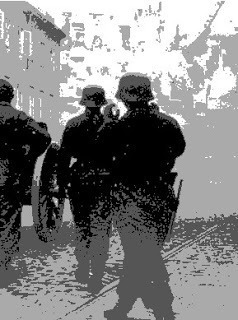
‘O what is That Sound’ is a ballad style poem. One of the central ideas of the poem is the frailty (weakness) of human beings. The speaker was frail when he continued avoiding the truth even when it was right in his/her face. The spouse was frail when he/she chose to escape leaving the speaker alone to face the wrath of the soldiers. The speaker of the poem hears a sound down in the valley from his home in the morning. He asks his spouse what that sound was. The spouse replies that it was the marching of soldiers. The rest of the poem continues in this conversational style except for the last stanza. The speaker next asks what the light that keeps flashing was. It is the flash of their weapons dear, says the spouse. Similarly, the speaker continues to question the actions of the soldiers and the spouse gives appropriate answers. The soldiers all the while keep marching towards the speaker’s house. The speaker thinks that they would stop somewhere before, but no; they pass the doctor’s house and the parson’s church and the cunning farmer’s barn, straight towards his house. The spouse says he/she was leaving the speaker now. The speaker, afraid asks him/her if the vows he/she took were all false. The spouse replies that they were all true but still, he/she must leave. And then the soldiers break the door and come into the house with burning eyes. 

Poem 2 - The Gift


https://www.theknot.com/content/wedding-gift-ideas

      Can you compare these two characters and find 5 words each to describe them?
 How did the lover propose?
 How is the lady described? 
 What are the four words used to describe the lover? 
What happens to the soul of the lover? 
What is the example from cooking used to describe her lover?
What is the tone of the poem?
What lesson does the lady lover teach the lover boy?
How can you describe the poem in one simple line? 
What is the meaning of True Love? 

#
                   Lady Love
Lover Boy
1
open-minded
selfish
2
sensible
sentimental
3
Freedom
angry
4
mature
possessive
5
fighter/teacher
Immature


Words that matter
Personal
Conversational
3.     Racially
4.     Discriminated
5.     Proposed
6.     Seriously
7.     Sentimentally
8.     Emotionally
9.     Lightly
Southerner
11.  Polite
12.  Chained
13.  Soul
14.  greedy
15.  Disappointed
16.  Disappears
17.  Gifted
18.  Precious
19.  egoistic
20.  narrow-minded
21.  shrinking
22.  expand
23.  selfish
24.  possessive

25.  Alice Walker

Poem 1 - Review questions – The Solitary Reaper – William Wordsworth

https://www.studyrankers.com/2015/03/study-material-of-solitary-reaper.html


  • 1.   How does the poet introduce the solitary reaper? 
  • 2.     How does the poet compare the song to that of Nightingale and Cuckoo?
  • 3.     What according to the poet are the topics of the song that she is singing? 
  • 4.     How does the poet leave the girl and her song? 

The poet, in the _______ stanza, invites the reader/listener to look at the Highland Lass who is singing a song standing alone in the field. She is gathering the crops and she is also singing a beautiful song. The poet asks the reader/listener to either stop and listen to the song or leave the place gently. The solitary reaper is cutting, and she is also binding the grain. Her song has got a melancholy tune to it. The whole valley is filled with the intense song of the girl. 
The _______ stanza is about the way the poet left the valley. The poet says that the girl’s song didn’t have an ending. He saw her singing at work, bent over the sickle. He listened to her song, without moving. As the poet moved away, he carried the song in his heart and afterwards the song disappeared. 
In the _______ stanza, the poet is guessing the topics/theme in the song of the reaper. He says that the sad song maybe is about ‘old, unhappy, far-off things and old battles’. The second guess is that the solitary girl is singing about some ‘ordinary sorrow, loss or pain which might have happened in the past and may happen again in the future.

In the _______ stanza, the poet compares the song of the girl to the nightingale’s song. The song is more appealing than that of a nightingale. It is so soothing to the tired travellers taking rest in the shade of the Arabian sands. In the same stanza, the poet compares the song to that of the Cuckoo bird. The singing of the girl is so thrilling that it even broke the ‘silence of the seas’ which lay beyond the Hebrides. 

Poem 2 - The Gift by Alice Walker - Summary


https://www.theknot.com/content/wedding-gift-ideas

The poem is personal and conversational in tone. The lady is a racially discriminated Afro-American woman. She tells us how her lover proposed his love seriously and sentimentally. Her lover seems to be an emotionally half-baked love-sick guy. She knows very well that soon one day he will leave her and forget her. So, she takes his words lightly. True love implies freedom, not slavery in the name of possessiveness. So, she did not chain him like a dog.  She did not want his soul but respected his love and feelings. Some days before, the lover, being a white American proposed the poet, a black woman.  He was so sentimental then and even gifted his soul to her.  Now, out of some misunderstanding, he boils with anger and wants his soul back.  It is actually he who proposed her first.  But now he says that she is so greedy enough to love such a high-class American.  These lines reveal that love that expects, gets disappointed and disappears is not at all true love. The poem is simply an awakening reply by a ladylove to her angry lover.  The lover wants his gifted soul back. The ladylove replies that he has always kept his soul with him and his act of gifting her his soul is only a child’s play. He thought he loved her but really didn’t.  Thoughts appear in the head, but true love feelings arise from the heart. He gave his thought to her as if giving a precious object just to keep it safe.  Now he wants his thing back as it is. The ladylove means that he never loved her at all. The lover was emotional, sentimental, egoistic and narrow-minded.  So, the lady said that he held his soul tightly in such a way that it started shrinking to fit his hand, like a sponge.  It is a witty reply by the lady that the lover would never love any girl in his life truly. He is actually selfish, but he calls her a possessive lady. The poet implies that true love should expand the soul rather shrinking to hand's size.  

Gift - Alice Walker Summary


The poem is personal and conversational in tone. Here, being racially discriminated Afro-American woman, she shows how her lover proposed his love seriously and sentimentally.  Her lover seems to be an emotionally half-baked love-sick guy. She knows very well that soon one day he will leave her and forget her. So, she takes his words lightly. True love implies freedom, not slavery in the name of possessiveness. So, she did not chain him like a dog.  She did not want his soul but respected his love and feelings. Some days before, the lover, being a white American proposed the poet, a black woman.  He was so sentimental then and even gifted his soul to her.  Now, out of some misunderstanding, he boils with anger and wants his soul back.  It is actually he who proposed her first.  But now he says that she is so greedy enough to love such a high-class American.  These lines reveal that love that expects, gets disappointed and disappears is not at all true love. The poem is simply an awakening reply by a ladylove to her angry lover.  The lover wants his gifted soul back. The ladylove replies that he has always kept his soul with him and his act of gifting her his soul is only a child’s play. He thought he loved her but really didn’t.  Thoughts appear in the head, but true love feelings arise from heart. He gave his thought to her as if giving a precious object just to keep it safe.  Now he wants his thing back as it is. The ladylove means that he never loved her at all. The lover was emotional, sentimental, egoistic and narrow-minded.  So, the lady said that he held his soul tightly in such a way that it started shrinking to fit his hand, like a sponge.  It is a witty reply by the lady that the lover would never love any girl in his life truly. He is actually selfish, but he calls her a possessive lady. The poet implies that true love should expand the soul rather shrinking to hand's size.  


Wednesday, 1 April 2020

Mohsin Hamid – Exit West - Refugee Series # 5

                                                   Buy Exit West: SHORTLISTED for the Man Booker Prize 2017 Book ...

Saed and Nadia, the two fictional characters living in an unnamed city are the main characters in the novel by Mohsin Hamid. This book is introduced as part of the Books & Authors series in RR. The novel deals with the themes of emigration and refugee problems. Looking back at the series, I feel that I should have named the series as ‘Words without Borders’ From Mexico to Vietnam, from India to Pakistan, from America to Korea, this part of the series dealt with the theme of refugees. The struggles are the same and the emotions are universal. Saed’s and Nadia’s story is presented as a parallel to the love affair of Saed’s parents. The way the author describes the bonding between Saed’s mother and father is inspiring. “Saeed’s mother and father were both readers, and, in different ways, debaters, and they were frequently to be seen in the early days of their romance meeting surreptitiously in bookshops. Later, after their marriage, they would while away afternoons reading together in cafés and restaurants, or, when the weather was suitable, on their balcony.” The author also brings in the changes that happened in the neighbourhood “The cinema where Saeed’s parents met was long gone by the time their son met Nadia, as were the bookshops they favoured and most of their beloved restaurants and cafés”. The author describes the transformation that the city has experienced. “When walking by the arcade, and seeing that old name on its new neon sign, sometimes Saeed’s father, sometimes Saeed’s mother, would remember, and smile. Or remember, and pause.”

Tuesday, 31 March 2020

Refugee by K.A Abbas - Refugee Series # 4


                                      Short Stories of K.A. Abbas: Valorising the Common Man ...
Today I would like to discuss a refugee tale based on Partition. The tale is narrated by K.A Abbas, an acclaimed journalist and filmmaker. He is the director who introduced Amitabh Bachan through the movie Saat Hindusthani which won the Nargis Dutt Award for Best Feature Film on National Integration. Refugee tells the story of Maanji, a Sikh woman who is caught in three definitive periods of Indian history, before partition, during partition and after partition. The story of Maanji who moved away from Rawalpindi and reached Bombay is a poignant one. This is because it is difficult to explain why a good soul like Maanji had to suffer. She also inspires us even in her suffering. There is a meaningful line in the story where Maanji tells her son in Bombay these words – ‘Your Bombay may be great and grand city son, but we can never forget our Rawalpindi’. I would like to connect the story of Maanji to other dots. One is the history of the town of Lyallpur. The town is the birthplace of Bhagat Singh and the mother of Amitabh Bachan and was an important town which was caught in the historical whirlpool known as Partition. The second reference is to the movie Manto which chronicles the life of Shadan Hassan Manto. In one of the more memorable scenes when he bids farewell to Bombay, Manto recalls that he owes Re 1 to a shopkeeper. An actor friend (Tahir Raj Bhasin) suggests he'd pay on his behalf. Manto though doesn't want the favour. "I want to be indebted to this city."
(https://www.indiatoday.in/movies/reviews/story/manto-review-nandita-das-film-is-a-brilliant-portrait-of-a-self-destructive-creator-1345431-2018-09-21)

Monday, 30 March 2020

Refugees by Viet Thanh Nguyen Refugee Series # 3

                                                       
                                                       The Refugees (short story collection) - Wikipedia


Pulitzer Winner, Vietnamese American novelist short story collection is titled as Refugees and the first story in the collection is titled as ‘Black-Eyed Women’. The story is about a nameless ghostwriter who is haunted by his memories from the past. The book is dedicated to all the refugees, everywhere. The two quotes given at the beginning of the book is quite relevant to the theme of the book. 

‘I wrote this book for the ghosts, who, because they’re outside of time, are the only ones with time’ 
Roberto Bolano - Antwerp 

It is not your memories which haunt you
It is not what you have written down
It is what you have forgotten, what you must forget.
What you must go on forgetting all your life
  James Fenton - A German Requiem 

The narrator is a ghostwriter and her mother is happy about the fact that her name doesn’t appear in the book. She tells her a Vietnamese story about a reporter who was tortured for writing a newspaper report about the torture inflicted by the government on the people. Her mother is the connecting link between American and Vietnam. The narrator and her mother shared a passion for words, ‘I preferred the silence of writing, while she loved to talk’. Her mother kept on recollecting stories and gossip and her favourite kind of story was the ghost story. One day the mother says that she has seen the ghost of her brother standing in the living room, water dripping from his clothes. Narrators had died in the Vietnamese seas when the refugee boat in which they were travelling was attacked by the pirates. In a way, he died saving the narrator. There is a feeling of guilt that haunts the narrator. She says that ‘his eyes stared at me whenever I closed my own’.  The writer herself led a ghost-like life sleeping throughout the day and waking up at night for ghostwriting the life of someone else. The title of the story ‘black-eyed women refers to ‘the ancient crones who chewed betel nut who sat in the market and who had loads of stories to tell about the Korean, Japanese, American invasion of Vietnam. The story ends with the narrator facing the ghosts from her past including her brother’s ghost and taking up a writing assignment which is a book of her own. 

Sunday, 29 March 2020

The Wanderers’ by Guadalupe Nettel - Refugee Series # 2


The Wanderers | Guadalupe Nettel | Granta Magazine

The second short story which I would like to introduce is ‘The Wanderers’ by Guadalupe Nettel. She is a Mexican writer and the short story is translated from the Spanish by Sophie Hughes. The short story opens with a profound observation of childhood. The narrator describes childhood as something which ‘lingers crouched silently in our grown-up bodies and one day when we are old it reappears like lightning, striking us with its freshness, its innocence’ and this is when ‘we will get the last glimpse of it’. The story is about the friendship of Camilo and the narrator. Camilo’s parents arrived from Uruguay to Mexico. The two families lived in the same building - ‘Villa Olimpica’. The building was full of exiles and when the children played in the evening, their screeches and yells came in different accents, Mexican, Chilean, and Argentinian’. The narrator connects the inhabitants of the building and the birds which lived on the trees in the garden near the building. The narrator loved birds. She liked the songs, colours, sizes and feathers. In fact, it is the fascination with birds that takes the story forward. She remembers the trip with her father to the aviary which transformed her father into a bird enthusiast. The narrator’s family moves away from Villa Olimpica due to her father’s teaching job and the narrator says goodbye to Camilo. In one of her sea expeditions to spot the Brown Pelican, the father, daughter and the team of biologists’ unintentionally catches an albatross. They don’t kill it but sets it free. The short story talks about Baudelaire’s poem on Albatross, in which the bird is described as - ‘sky born kings, graceless and mortified. The narrator never wrote to Camila because she was ‘intimidated by the distance and time’ It was only when she was in France that she wrote to Camila. By 1983, half of the residents of Villa Olimpica left the building and went home. The author compares this to the natural behaviour of the albatross ‘even after flying across, barely touching the land’ some kind of ‘instinct guides them home’, not only to their country of origin ‘but just a few meters from the place where they were born’. The story is built on the symbol of Albatross. Unlike Coleridge who presents the bird as a cursed being (inspired by Baudrillard) here, the bird is connected to human lives and is also linked with the themes like migration, exile and homecoming. 

Saturday, 28 March 2020

Bernard Malamud's The Refugee - Refugee series # 1


This week in Books and Authors, I would like to introduce six literary pieces based on the theme of refugees. The first in the series is a short story by Bernard Malamud. In his interview with the Paris Review, the author says that he wants his books to speak for themselves. He asks the reporter “You can read? All right, tell me what my books mean. Astonish me”.  He talks about his parents, who were not educated but ‘their values were stable’. He fondly remembers how his father gifted him the twenty volumes of The Book of Knowledge and received a radio from him when he was in high school. He enjoyed ‘watching movies and reading the dime novels’. He had made up his mind regarding what he wanted to become in life when he took to literature. As early as eight or nine, he used to write little stories in school. Bernard Malamud shares his wonderful perspective on learning and teaching. He says, “You learn what you teach, and you learn from those you teach” He enjoys writing more than talking because he loved the privileges of the form. The Refugee is the story of Oskar Gessner and Martin Goldberg. The former is a refugee from Germany in the US and the latter is a teacher of English Language. The former tries ‘to hide his despair but not his pain’. The latter made a little living from the poor refugees. Bernard Malamud has invested heavily on this student-teacher duo. I was reminded of the movie – The King’s Speech which again presented to us the guru-shishya bonding but in a highly power centric manner. The student is a king and the teacher is an ordinary phonetician. Even the movie “Anna and the King brings the teacher-student bonding based on power. One of the interesting notions that are presented in The Refugee is about the powerlessness of the tongue. Oskar can speak, read and write only German and using this the author represents the sad plight of refugees in a foreign land. “To many of these people, articulate as they were, the great loss was the loss of the language – that they could no longer say what was in them to say”. One character further says that – ‘I felt like a child or worse often like a moron, I am left with myself unexpressed. What I knew, indeed, what I am becomes to me a burden. My tongue hangs useless.’ The story has a tagline – ‘I thought I knew his story. But there was some deep secret he had never told me’

Friday, 27 March 2020

Calm, the app and the book - Review

                                    Image result for calm book

Today I would like to introduce the book ‘Calm’ as part of the ‘Books and Authors’ series @ RR. The author is Michael Acton Smith. It is a book which is based on the mobile app by the same name. We can roughly label it as a workbook for the ideas presented in the mobile app. The book (along with the app) is pitched for the sleep-deprived and stressed human beings. I remember posting a note in this blog long back about the significance of sleep in the modern world. 

Like Macbeth yearning for sleep, there are many sleep-deprived souls in our midst. How to sleep is only one area that is explored in the book. 
The innocent sleep, 
Sleep that knits up the ravelled sleeve of care, 
The death of each day's life, sore labour's bath, 
Balm of hurt minds, great nature's second course, 
Chief nourisher in life's feast.
The book is part of a new self-help project which has a book, digital version of the book and the mobile app which contains audio clips and short videos. The book deals with mindfulness, relationships, workplace, happiness. The book begins with a beautiful quote - ‘Calm the mind and Change the World’. In the short introduction to the book, the creator talks about the need to develop a calm mindset for acting responsively rather than reactively. They say that attaining this state of calm is one of the greatest challenges of our times. The book is designed in the form of a journal in which the reader can add handwritten notes and jottings. The book heavily borrows from literature in terms of quotes from Wordsworth, William Shakespeare and even from music - George Harrison. If you are interested, you can check out the mobile app to experience 100 + guided meditations and life-changing master classes by world-renowned mindful experts like Pico Iyer and Elizabeth Gilbert. (The premium features are available only for subscribers)


Thursday, 26 March 2020

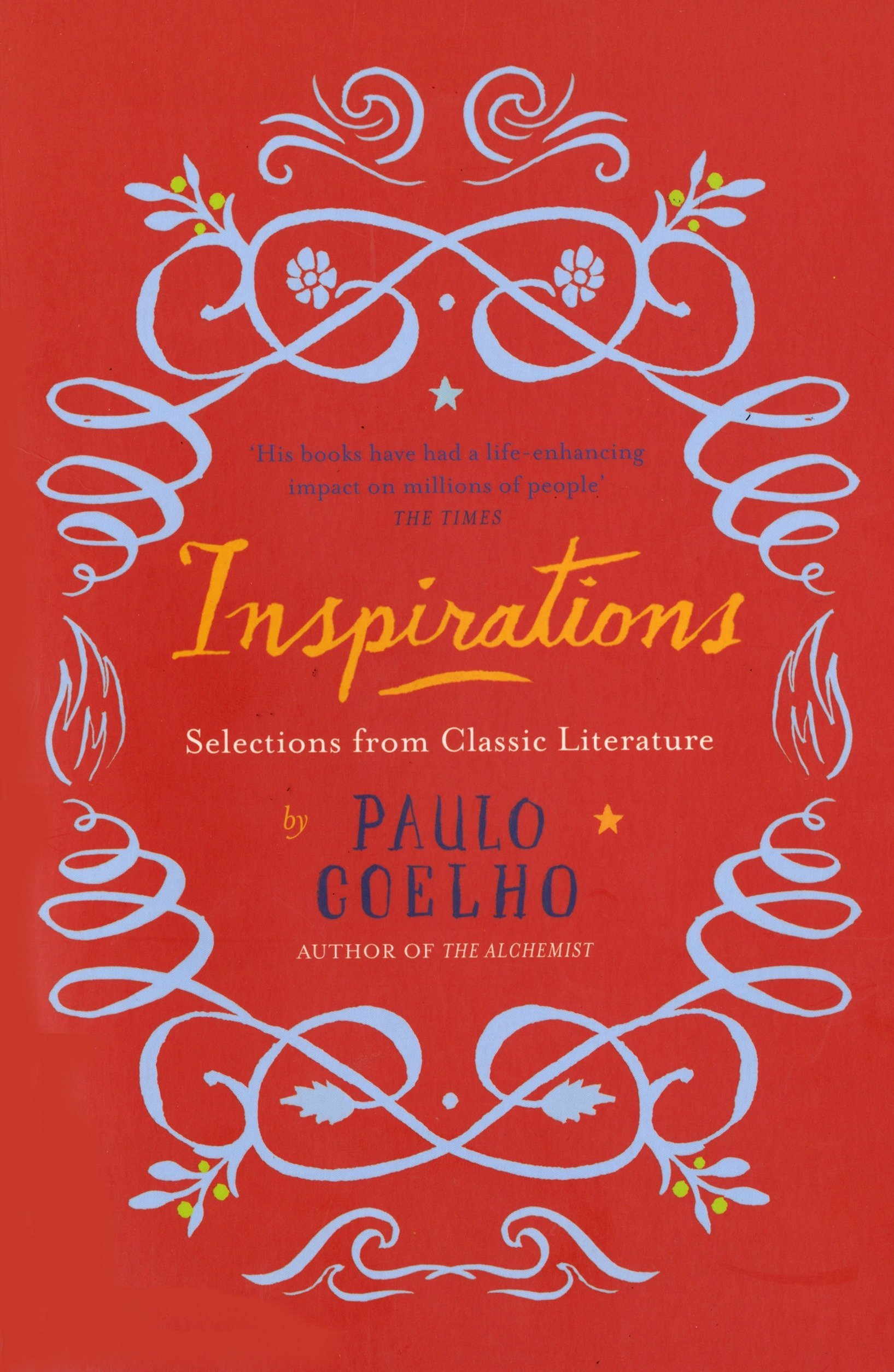
Paulo Coelho - Inspirations - Book Review


Image result for paulo coelho inspirations

I would like to introduce a book from the author of Alchemist which is a collection of selections from classical literature. The collections are arranged in four sections – water, earth air and fire. It is a collection of extracts from classic books that have inspired him. The works are as diverse as The Art of War, Lady Chatterley’s Lover and Frankenstein. Paulo Coelho talks about the way he received a book from his friend when he was getting ready to compile this book. The title of the book was 'The Book' by Jorge Luis Borges and it was written after Borges lost his vision. Coelho describes the style of writing in the book as conversational and he further adds that ‘the text had the fluidity and closeness of a talk’ Borges also describes the importance of the spoken word and how the ancients did not revere the book – the written word. They had this feeling that the written word ‘imprisoned the spirit’ of the oral teachings. 
Most of the great teachers of antiquity never wrote a single word. The teachings of Buddha, Pythagoras, Socrates or Lao Tzu were all oral. The sacred books in the written form became extensions of memory. The Ten Commandments was inscribed to make the human beings understand the divine stipulations. The written word enables us to remember and at the same time, it perpetuates the loss of memory. Just like Emerson who believed that a library was a magic cabinet and in books, we find the best demonstrations of the human spirit but to bring them to life we need to open the books and read them. Paulo Coelho is attempting to compel his readers to go to their magic cabinets and re-awaken their imagination. The collection or anthology has gems like the ‘Hymns to Agni, God of the Sacrifice’ - Rig Veda, from Bhagavad Gita, and Rabindranath Tagore’s selected poems – Brahma, Visnu and Siva. 

Wednesday, 25 March 2020

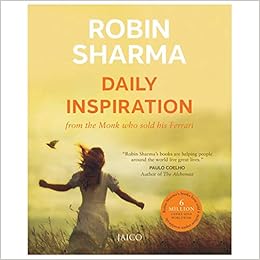
Robin Sharma - Daily Inspiration - Book Review


Image result for Robin Sharma - 365 days
Continuing on my journey of introducing books from my personal collection, this week it will be self-help books. To start with the series, today I would like to introduce a small book by Robin Sharma which provides you with daily inspiration. The quotes are culled from the books in the Monk who sold his Ferrari series. For the sake of sampling, I am giving you the daily inspiration for February 10. I hope to add it as a regular feature in Morning Mantra series in the coming days. “If you really want to improve your outer world, whether this means your career, your relationships or your finances, you must first improve your inner world. The most effective way to do this is through the practice of continuous self-improvement. self-mastery is the DNA of life mastery. Greatness is an inside game.” Excerpt From: Robin Sharma. “Daily Inspiration from The Monk Who Sold His Ferrari.” Apple Books.

Tuesday, 24 March 2020

James Patterson - Along Came A Spider - Book Review


Image result for james patterson along came a spider

This week we have so far covered Japanese, Swedish, Malayalam crime fiction writers. Today we are looking at the American crime writing scene. The author is James Patterson and recently I read his book ‘Along Came a Spider’ which introduces us to the detective Alex Cross. The series based on Alex Cross has been running since the 1990s and is ongoing with the latest book which came out in 2019. What is so evident in the book is the life of Alex Cross who is an African American detective who has to face the social inequalities of the times. He is also a psychologist and a family man, and the novel can very well be termed as a psychological thriller. It is a mind game just like a game of chess. The events in the novel are based on a historical event which happened in the year 1932 when the infant son of Charles Lindberg was kidnapped and murdered. James Patterson has made it a point to make his detective humane. This is achieved through the interactions of Alex Cross with his grandmother and family. He is also close to his partner John Sampson. There is one line which is said by Alex Cross describing his long-standing friendship with Sampson. “Sampson knows me better than my own kids “The tribute he pays to his grandmother is also quite poignant - “She made a homicide detective, with a doctorate in psychology, who works and lives in the ghettos of Washington, D.C.”. The book was made into a movie and Morgan Freeman donned the part of detective Alex Cross.

Monday, 23 March 2020

Lajo Jose and Esther - Series Review


In today’s Books and Authors, I would like to introduce an author who is just 3 books old. He has already become a sensation in the world of Malayalam Crime Fiction. His name is Lajo Jose. I have read his first two novels - Coffee House and Hydrangea and I am listening to the third one ‘Ruthinte Lokam’ (The World of Ruth) using the Storytel app (Thanks to KLF20 delegate kit for the three-month free subscription) There are three reasons why I was attracted to these books. First one involves the childhood memory of reading the novels of Kottayam Pushpanath, Batton Bose and Ettamannur Sivakumar. These three are considered to be the doyens of Malayalam Crime fiction. They ruled the literary scene in the ’80s and ’90s. It is through them that I developed a flair for reading and also the passion of seeing places in the world. Kottayam Pushpanath wrote about the Egyptian Pyramids and Amazon forest and even Hitler’s bunker. So, when I heard that there is a new kid on the block writing like Kottayam Pushpanath, I immediately ordered the two books and I was even lucky enough to meet him in the Author’s lounge of KLF20. The second reason I love Lajo Jose is that he introduced a female detective Esther who worked as a journalist. She debuts in the first novel as a journalist who drawn into this case and later becomes a full-time investigator. She doesn’t have a companion only a friend Aparna who is also a journalist. Lajo Jose is different because he had the guts to introduce a female sleuth when the world of Crime Fiction is dominated by men. The third reason why I appreciate Lajo Jose is because he followed his passion to be a writer. He was working as an investment banker and he quit his job to become a full-time writer. He has found what he wants in his life and is diligently pursuing it. As I write this short note, Lajo Jose is working on his fourth novel in the Esther series. 

Sunday, 22 March 2020

Henning Mankell - Wallander - Review

                                               Image result for Wallander


Inspector Wallander who is the sleuth in Henning Mankell’s novel is a casual being who doesn’t have the urgency or excitement of Holmes. He is prone to all sorts of human follies and foibles. A middle-aged and melancholic male detective who returns to his empty home every day. The home reminds him that he once had a family. “Every time he came home in the evening after a stressful and depressing workday, he was reminded that once upon a time he had lived there with a family. Now the furniture stared at him as if accusing him of desertion,” (The Troubled Man, 2009) In a way, the corruption and decay found in the hero is an echo for the corruption and decay of the society around him. The first novel which I read in the Wallander series was Sidetracked which was followed by Dogs of Liga and Faceless Killers. My fascination towards Swedish crime thrillers began with the Girl with Dragon Tattoo series by Stieg Larsson. When we read a series, we get so used to the characters and their life. We know the characters inside and out and it creates a kind of fascination. Maybe that’s the reason why Henning Mankell wrote nine novels which were all made into movies. The BBC series Wallander made the author famous in the English-speaking countries along with the translated works. This crime novel is about the deaths of three young Swedes and the death of Wallander’s colleague. 

Saturday, 21 March 2020

The Devotion of Suspect X - Review


Image result for devotion of suspect x

This week ‘Books and Authors’ will feature crime and mystery novels from my library. The first novel that I would like to discuss is ‘The Devotion of Suspect X’ by the Japanese author Keigo Higashino. I got introduced to this author 2 months ago through an old friend of mine from MCC. Keigo Higashino is known for his mystery novels. Most of his books have been turned into films and T.V series. He started writing novels while still working as an engineer at Nippon Denso company. The book that I am introducing today is the second highest-selling book in all Japan. It won the prestigious Naoki Prize for Best novel which is the Japanese equivalent of the National Book Award and the Man Booker Prize. The story involves a mathematician and his neighbours. The life of Ishigami, Yasuko and her daughter Misato get entangled in this novel. The reader also is treated to some valuable insights about Mathematics and Education. There is also the celebration of academic camaraderie between two mathematicians, Yukawa and Ishigami. There are references to mathematical geniuses like Arthur Cayley and Paul Erdos. There are some interesting insights based on the art of teaching and learning. Sample these lines – ‘Yet too many teachers refused to answer simple questions of relevance from their students. No, Ishigami thought, they probably aren’t able to answer them. They taught without really understanding their subjects, simply following a set curriculum, thinking only of coaxing a passing grade from the students so they could send them on their way to make room for next year’s flock. Questions like Morioka’s would have been nothing but an irritation to them’.

You can also trace the true ‘inspiration’ for the Malayalam movie ‘Drishyam’ which was later made in Tamil as ‘Papanasam’. This book inspired the Japanese director Hiroshi to make a movie titled – Suspect X which in turn inspired the Korean movie – The Perfect Number (2012) and since most Indian filmmakers watch Korean movies, Drishyam came out  in the year 2013 followed by Papanasam in 2015. 

Wednesday, 11 March 2020

Enigma - Hugh Sebag-Montefiore

Image result for Enigma - Hugh Sebag-Montefiore

Like a good book, a visually rich film mesmerizes the human mind for some days. The movie I am referring to is 1917 which I saw yesterday. Based on the WW1, the movie is a good ‘textbook’ for both history and literary lovers and is also technically perfect as the whole movie is composed of a single camera shot. Today’s Books and Authors present a book which is based on the Enigma machine which was used by the German navy to take out the English ships. The book is titled as Enigma - the battle for the code. The book delves deeper into the story of the Enigma machine and it will be an interesting read for individuals who are curious about the past. The book takes us beyond the scenes from the movie - Imitation Game which chronicled the life and times of Alan Turing. It is a commonly held belief that Alan Turing broke the code and saved hundreds of British U-boats and ships. The book tells us that the encoding the Enigma machine happened due to the sacrifice of ordinary British seamen who risked and sometimes lost their lives in the battle for the code. They are the ones who captured Enigma codebooks and manuals which led to the team at Bletchley Park to break the code. The capture of the Enigma spy, Hans Thilo Schmidt also was also an important step towards the cracking of the code. Bletchley Park is an important historical site and to quote from the website https://bletchleypark.org.uk. ‘Bletchley Park is a place of exceptional historical importance. It remains highly relevant to our lives today and for the future. It is the home of British codebreaking and a birthplace of modern information technology. It played a major role in World War Two, producing secret intelligence which had a direct and profound influence on the outcome of the conflict’.