


Disability Studies draws on ideas from fields such as philosophy, sociology, psychology, and history. It helps students understand how disability is connected to society, fairness, and politics. Today, images of disabled people are everywhere — in children’s books, movies, and magazines. But these images often show disabled people in minimal ways, such as helpless victims, villains, or heroes. Disabled children are usually shown either as brave sufferers or as angry characters. Disability Studies encourages students to question these images and think critically about how society treats disabled people. It also helps students understand how social systems and institutions affect the lives of people with disabilities. Disabled people often face pain, illness, loss, and frustration, and may also feel left out psychologically. Everyone experiences poor health at times, which reminds us that being healthy and able-bodied is not permanent. In recent years, Disability Studies has become an academic subject in universities, along with growing interest in Inclusive Learning in the UK. Some of the literary texts that have elements of disability are Frankenstein by Mary Shelley, The Hunchback of Notre-Dame by Victor Hugo, Of Mice and Men by John Steinbeck and The Bell Jar by Sylvia Plath.

While reading the Mumbai edition of The Indian Express, I came across this article, ‘What AI has to do with Motherhood ‘, by Neeraj Bunkar, about the movie Humans in the Loop. I watched the movie, which is divided into three chapters and runs 1 hour and 14 minutes. As I watched the movie this morning, one scene made me think about how AI can impact our lives. If we are not labelled, then we don’t exist in the world of AI. One practical application is in agriculture, where it helps remove pests and weeds. The character of Nehma, played by Sonal Madhushankar, points out to her supervisor that a beautiful green worm or larvae is not a pest. She shares her indigenous knowledge, saying they only eat the rotten parts of the leaf. She refuses to label it as a pest. This will enrage the American company funding the AI centre in India, where many tribal women from Jharkhand are employed as data labellers or annotators. Nehma is a child of the forest. The villagers say that she tamed a porcupine as a child and used to spend time with it in the forest. Humans in the Loop is based on an article by Karishma Mehrotra titled Human Touch. The article is about the first-generation women workers in Indian towns and villages. Produced by Kiran Rao, Humans in the Loop explores
Artificial Intelligence is described through the often-repeated line – AI is like a Child - AI learns from its environment (data), can absorb human biases, and develops through feedback. Still, it lacks true consciousness and life experience. Just like the child who learns to walk in the movie, AI is also learning to perform tasks. What it learns matters a lot, and this is what the film is telling us. Artificial intelligence systems that are developed and deployed using a perspective centred on Western/European cultures, values, and data, often at the expense of non-Western experiences and knowledge systems. When Nehma types the prompt "Beautiful Tribal Woman," the images generated are of Native American women. She trains the AI model to create images of beautiful tribal women from Jharkhand by labelling pictures of women from her tribe. This is an act of reclamation and assertion. The superb cinematography captures two scenes that can be seen as the movie's core – one is the hands feeling the softness and dampness of the mossy rock, and the other is the final scene in which Nehma (as a child) listens to the sounds of Nature by pressing her ears against the ground. The movie is also a case study for gender sensitivity, women’s rights, and Neo-colonialism. The movie doesn’t suggest that AI is bad, but it argues that AI should also incorporate local, indigenous knowledge systems.

Reference
https://fiftytwo.in/story/human-touch/
One of the sentences that stayed with me from the article "Repair those Rifts - Why Integrating Health Humanities into the medical curriculum is vital," which appeared in the Education Plus supplement of the Hindu on December 1, 2025, is: "Education is not just about ticking check boxes." As teachers and students, we have observed the tendency to do things merely for the sake of doing them, without any deeper significance or reflection. This resonated strongly with the line from Thrushes by Ted Hughes – ‘his act worships itself’. The authors recommend Paulo Freire's practice of ‘critical consciousness’, which helps us understand the nuances of real, everyday experiences—the way life is felt, endured, and understood in practice, not just in theory. They advocate for integrating the humanities into medical practice. Humanities departments study illness as a cultural narrative, whereas observation, clinical empathy, and communication are components of healthcare education. Malcom Gladwell’s Talking to Strangers highlights the importance of a patient’s backstory in doctor-patient communication. This aligns with "narrative medicine," where a story aids diagnosis and treatment. Understanding the backstory fosters empathy and more effective, holistic care.
Three examples are given to show that academic courses are being offered in the West based on these concepts. The first is Columbia University’s narrative medicine training, which focuses on listening beyond symptoms. The Stanford course pairs literature and bioethics to examine autonomy and justice. (Dr. Paul Kalanithi, author of When Breath Becomes Air, was a physician, writer and neurosurgery resident at Stanford University—King's College London, blending philosophy and history to debate resource allocation and end-of-life care. In India, the Medical Council introduced electives in Health Humanities. The National Medical Commission included Attitude, Ethics and Communication (AETCOM) in the curriculum. There is a need to integrate humanist socio-cultural and economic inquiry into the medical curriculum, which remains a distant dream. The authors propose a five-point framework to achieve this. (Check the poster)

The coursework for these academic programmes will involve rigorous, experiential learning and will be reinforced through fieldwork, outcome reviews, and work with advocacy groups, with patient voices at the centre. This will equip healthcare professionals and academicians to join global conversations linking medicine, anthropology, ethics, technology and democratised access to healthcare. Only by integrating humanities and medical science can India develop clinicians who not only treat diseases but also combat discrimination and mend the divides between science and society, technology and humanity.
References and further reading:
https://allpoetry.com/Thrushes
Freire, Paulo. Education for Critical Consciousness. Bloomsbury Academic, 2013.
https://sps.columbia.edu/academics/masters/narrative-medicine/master-science/curriculum-courses
https://med.stanford.edu/bioethics.html
Gladwell, Malcolm. Talking to Strangers: What We Should Know About the People We Don’t Know. Little, Brown and Company, 2019.
https://www.kcl.ac.uk/study/postgraduate-taught/courses/philosophy-of-medicine-and-psychiatry-ma
Mahajan, Rajiv, and Tejinder Singh. Humanities in Medical Education. Jaypee Brothers Medical Publishers, 2018.
Kleinman, Arthur. The Illness Narratives: Suffering, Healing, and the Human Condition. Basic Books, 1988.
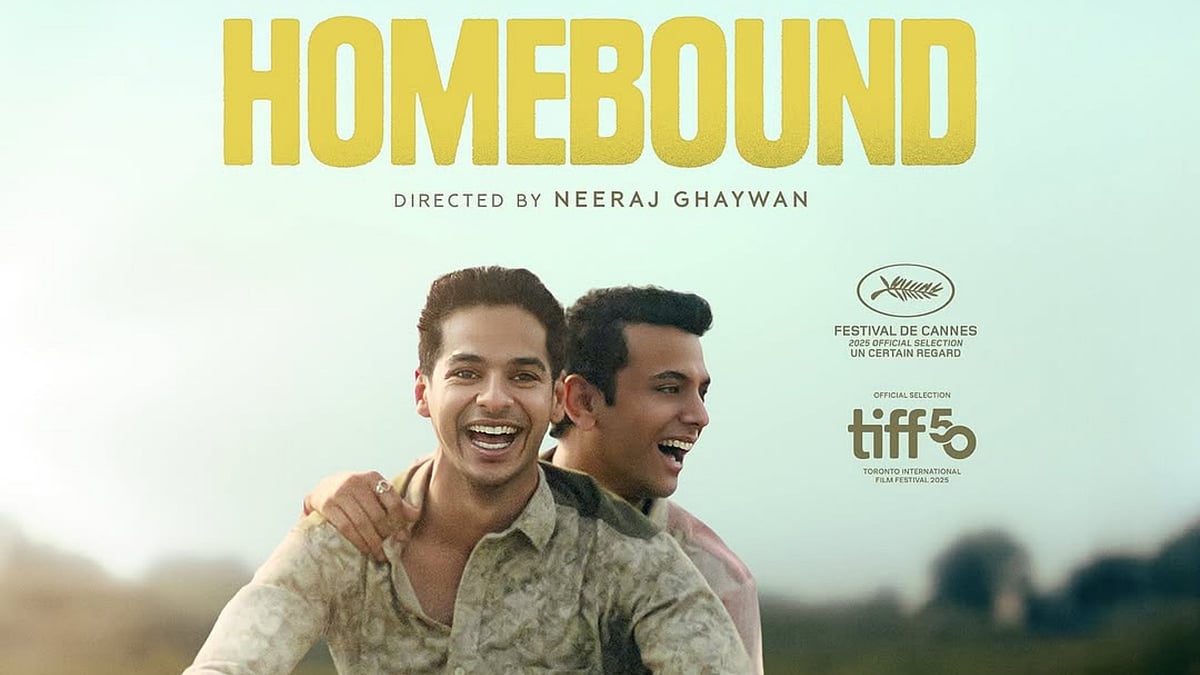
Homebound is India’s official entry to the Oscars 2026 in the Best International Film category. Big names like Martin Scorsese and Karan Johar back the movie. The movie is based on a true story, which appeared as an article in the New York Times (NYT) on July 31, 2020, titled ‘A Friendship, a Pandemic and a Death Beside the Highway’. It is written by Basharat Peer, a staff editor for Opinion, who is the author of “Curfewed Night,” a memoir of the conflict in Kashmir, and “A Question of Order: India, Turkey, and the Return of Strongmen.” Peer describes the connection that he made with the image, which was widely circulated on social media during the 2019 COVID-19 pandemic.

Basharat Peer writes in the article, “The gift of friendship and trust it captured filled me with a certain sadness, as it felt so rare. I felt compelled to find out more about their lives and journeys”.
I watched Homebound last night, and it felt like the story of these two friends represented the India we live in. Unemployment, social injustice, gender discrimination, failed civic systems, corruption, all these and more get a space in the movie. At the core of the film is the friendship between Mohammed Shoaib Ali and Chandan Kumar, played by Ishaan Khatter and Vishal Jethwa. Janhvi Kapoor plays Chandan's love interest. Her character in the movie is not the glam doll kind of role she typically portrays. The film is just two hours long, but its impact will not fade for some time. Excellent photography and soft music complement the narrative, intensifying the experience.
Homebound is currently streaming on Netflix.
Reference
https://www.nytimes.com/2020/07/31/opinion/sunday/India-migration-coronavirus.html


