Thursday, 15 November 2018

Stan Lee - The Man who spun the web of comics


Tributes to Stan Lee on his star on the Hollywood Walk of Fame on 12 November. Photograph: Rex/Shutterstock 
He passed away a few days back as I was getting ready to sleep. First, I thought it was just another fake news that the social media spins every day. Then I checked the websites of BBC and other standardized news services and found that it was true. Stan Lee is dead. An event which will be marked in my personal history as a sign of ageing. This blog is an attempt to pay homage to this creative genius who influenced me and countless numbers of minds because he gave us a memorable and colourful childhood. To use the title of his second memoir which he co-authored with Peter David – Amazing Fantastic Incredible: A Marvelous Memoir. This is my way of paying homage to the man who lives through his creations. 

I did some research by reading some of the obituaries that appeared in some of the mainstream publications. Mainly, I have used the written memorial which appeared in The Guardian and the International New York Times. I also looked at Twitter for capturing some of the 140 lettered obituaries. As an extended activity, I collected some of the responses from the readers of NYT. 

Stan Lee always aspired to create comic heroes who are infused with some human qualities. He hated the existing style of heroes who according to him – ‘were all cardboard figures’ (NYT). He also felt the acute sense to bond with his readers and he talked about the need to create a space ‘for some private fun that the outside world wasn’t aware of’. Stan Lee himself was an avid reader and he started reading Shakespeare at the age of 10 along with reading of pulp magazines. He also enjoyed reading the novels of Arthur Conan Doyle, Edgar Rice Burroughs and Mark Twain. (NYT) 
The NYT article describes Stan Lee in five adjectives – energetic, gregarious, optimistic, grandiose and self-effacing. He is also compared to the greatest showman –P.T  Barnum                      

Stan Lee enjoyed the act of writing and he describes his own writing style in an inspiring way – Almost everything that I’ve ever written I could finish in one sitting, I am a fast writer. Maybe not the best, but the fastest.” This line brings to my mind the above quoted adjectives – He is full of energy, optimist and is also self-effacing. His passion for writing and creating was so high that during his stint with the Army Signal Corps he was moonlighting as a comics writer. It was his wife who encouraged him ‘to write the comics he wanted to, not merely what was considered marketable. 

https://www.amazon.com/Excelsior-Amazing-Life-Stan-Lee/dp/0684873052
Stan Lee wrote a slim memoir with George Mair which was titled – Excelsior! The Amazing Life of Stan Lee. The word Excelsior means excellent and it is true about the characters created by Stan Lee. His characters like the Kafkaesque character Gregor Samsa undergoes a transformation. Peter Parker was bitten by a radioactive spider; Bruce Banner was bombarded with gamma rays. They apart from this external transformation also contain internal conflicts which was beautifully portrayed in Spider Man. The Incredible Hulk is constantly at war with his shadow. ‘These men have the power to turn the world on its head. But they also seem as much cursed as blessed’. (Guardian) 

Comics instilled in the reader a positive approach towards life ‘a pretty glorious message to the punky kids who blunder into its universe just before the hormones kick in, it tell them that they do possess super powers. They can impact the world, that adulthood is an adventure. But it also says that, guess what, your life will still be a mess. Your increased speed and strength will throw up a whole new set of problems and that gaining great power brings your responsibility’ (Guardian) 

Stan Lee redefined for us the word Hero. According to him, the hero is one who does good and is always kind. He/she will fight injustice. Raise up people when you see they are in need. That’s the legacy that Stan Lee has left us. Like the song by Mariah Carey, we need to unlock the hero within ourselves. Stan Lee gave us the key...
There's a hero
If you look inside your heart
You don't have to be afraid
Of what you are
There's an answer
If you reach into your soul
And the sorrow that you know
Will melt away

The following articles were used as a reference in preparing this blog: 


Wednesday, 14 November 2018

Knowing Cy Twombly..


Stumbled upon this interesting biography of an artist in The International New York Times. (Page 15 - 13-11-18) The title of the biography itself was a major attraction - Chalk: The Art and Erasure of Cy Twombly. The artist in perspective is Cy Twombly who lived a life of a recluse. Even though he was born in Virginia, United States he spent most of his life in Italy in the city of Naples. In his career as an artist, he had given only two interviews. When quizzed about his personal life, he had the tendency to craft stories. ‘Twombly is famously difficult and famously elusive, and this has not made his work any easier to see’. (Vogue Interview) The review begins with a wonderful use of a word that is used in hunting -'Spoor is a hunter’s word, for the scent an animal leaves behind in a forest, the scent you track to bag your prey. It might be a biographer’s word, too — the essence of a person that drifts out of his or her diaries and letters, the idiosyncratic, unmistakable traces that a biographer pursues in the archives'. The review contains descriptions about how the world viewed the works of Twombly. There are both intellectual reactions from literary figures like Frank O'Hara and Roland Barthes. The former describes the artistic creations of Twombly as “A bird seems to have passed through the impasto with cream-coloured screams and bitter claw-marks,”. I was curious about the first part of his name and was able to uncover the strangeness of Cy in the article which appeared in the Vogue magazine – ‘His father, a coach and, later, athletic director at Washington and Lee University there, had acquired the nickname Cy (after the legendary pitcher Cy Young) when he pitched for the Chicago White Sox one summer. He passed it on to his only son, who showed no enthusiasm for organized athletics’. 

My journey into the life of this enigmatic soul started with the book review in the International New York Times but I was able to cull more details about this man from the Vogue interview which even talks about his reading patterns. ‘He reads for two or three hours every day in his eclectic fashion—history, poetry, travel books, Walter Pater’s essays, Robert Burton’s The Anatomy of Melancholy’.

The interview also offers rare glimpses into the working style of this artist. In the words of his contemporary Rauschenberg- “He hates to make plans or schedules, moves from place to place on impulse, doesn’t always show up when he’s invited somewhere. “Cy says he’ll be there in half an hour,” Rauschenberg quips, “but he doesn’t say which month.” 
As mentioned earlier in the blog, the book review talks about the emotional reactions of the world towards the work of this artist. There were instances where woman danced naked and another one kissed the painting leaving the lipstick smudge on the painting. They invite not just admiration but ardour. A woman once took off her clothes and danced naked in front of them; another kissed an all-white panel, leaving a bright lipstick mark (“a rape,” the curator fumed).

The artist Twombly reminds me of Banksy who had kept a shredder hidden inside his painting and the kind of furore that it created in an auction at Sotheby's in London. 

The life and mind of an artist is as curious as of his creations.  You can continue the journey of discovering Twombly using the links given below. 


Tuesday, 13 November 2018

Rendezvous with Paul Salopek


‘Walking is falling forward. Each step we take is an arrested plunge, a collapse averted, a disaster braked. In this way, to walk becomes an act of faith’

In an age where news travels in the speed of lightning, the voice of Paul is a game changer. He advocates a type of journalism which is known as slow journalism. He goes beyond this nomenclature by naming this journalism as grassroots journalism, boot journalism or immersive journalism. Paul Salopek, a two-time Pulitzer Prize-winning journalist (2001 and 2010) expressed his strong desire to oscillate between working in a newsroom and in the open environment.  A biologist, he doesn’t believe in a rigid work environment nor does he believe in a strict academic structure. He describes Africa as a place of inexhaustible stories. He started his Out of Eden walks in Ethiopia tracing the route taken by the early humans. He describes his act of walking as ‘storytelling walk through time’. What he has tried is to map the human narrative by foot. He brings in the allusion of the Wandering bards and the Japanese Zen master Basho who travelled everywhere and composed haikus based on his experience of walking through the Japanese villages. The public was updated about the happenings around them through these wandering minstrels. It is so convenient for us to receive news from around the globe using our smartphones and the WhatsApp messenger service. According to Paul, when it comes to reporting it is not about who is the fastest and who arrives first. Every publishing house around the world should have uniqueness in the way the story is told. He advocates a kind of journalism that is based on the act of walking where every step is a learning experience. This is like an ongoing adult education class. 

The tools for slow journalism. 

  • The gadgets used – He has used a solar sheet which is normally propped on a camel’s back and it charges the laptop in just under 4 hours. He intends to use solar shirts in the near future. 
  • Animal Power – The animals that were used to traverse difficult terrains. Camels in the desert and donkeys in the mountains. 
  • Walking partners – The locals who travelled with him and were always eager to show and talk about the local history and traditions. 
In the next phase, he discusses the major themes that are covered in slow journalism. 

  1. Migration 
  2. Conflict 
  3. Culture 
  4. Religion 
  5. Climate change
  6. Human rights
  7. Technology 
  8. Environment 
  9. Men 
  10. Women 
  11. Children 


How does he stay connected with the world? 

How does he inform the world about his travels and how does it reach the office of National Geographic magazine and other publishing houses. 

  1. Digital dispatches
  2. Print
  3. Maps of storytelling 
  4. Milestones 
  5. TV & Radio  
  6. Civic Programs
  7. Education Partnerships

You can read more about Paul Salopek by clicking the links given below: 

-->

Sunday, 11 November 2018

Connect the Dots - A new series in RR


Image Source: Google
Connect the Dots: Analysis, Synthesis and Opinion 

A new series which will interact with the social, political, cultural and literary events happening around us. It examines the hidden connections and apparent similarities. The title is an instruction to the reader and it implies that the ultimate opinion should be formed in the mind of the reader and he/she is free to share their views on the same. The idea is to curate news stories, articles, images, videos, and other resources from different sources and dovetail them together as a single entity. The series would be featured every day at 10.30 PM based on the themes and ideas that are shaping our world and our understanding of the world. Would like to dedicate this series to my buddy and the founder of this group. The title is inspired by the speech given by Steve Jobs at Harvard in the year 2005 and the creative/critical process is shaped by the book 21 lessons for the 21st century by Yuval Noah Harari. In one sentence we can describe the series as a curated montage of facts, people, events and ideas. Connect the Dots will start on the 20th of this month as part of the First Anniversary Celebrations of Readers’ Rendezvous…If you would like to join the WhatsApp group please mail me @ jith77@gmail.com

Monday, 5 November 2018

Rudyard Kipling, Nat Geo, and Wheeler & Co.


Watched this programme on Nat Geo titled Great Indian Railway Journeys presented by Michael Portill. In today’s episode, he traced the railway route from Lucknow to Calcutta. En route he had two pit stops, one at Bodh Gaya and the other one at Chittaranjan. The former known as the epi center of Buddhism and other one famous for its Loco works. In one of the stations, Michael Portill visits the Wheeler and Co book store which is an integral part of any Indian Railway Station. Rudyard Kipling who was in dire need of some cash to visit England, approached the Wheeler book shop and requested to sell his books for 1 rupee so that he can afford a passage to England. His potential customers or readers were the railway passengers. Here is the reference from Wikipedia - Plain Tales from the Hills written by Rudyard Kipling were issued as the "Indian Railway Library Series" by Wheeler. These were the first publications of Kipling's collection of stories. These books were sold on railway stations. They cost One rupee, then fifteenth part of a pound. Richard Jaffa considers them "amongst the early paperbacks" 
The other fascinating thing about the presenter is that he had this hard-bound book with him from which he read about the places he intended to visit. The screenshot attached is the final short where he is getting ready to read Tagore and in the background, we can see the Victoria memorial in Kolkata. 


Tintin Connections


Sir Galahad in Arthurian legend is a knight of King Arthur's Round Table and one of the three achievers of the Holy Grail. He is the illegitimate son of Sir Lancelot and Elaine of Corbenic and is renowned for his gallantry and purity as the most perfect of all knights. Emerging quite late in the medieval Arthurian tradition, Sir Galahad first appears in the Lancelot–Grail cycle, and his story is taken up in later works such as the Post-Vulgate Cycle and Sir Thomas Malory's Le Morte d'Arthur. (Wikipedia)


Faust and Marguerite is a romantic opera in three acts, dating from 1855, based on the Faust legend. The score was composed by Meyer Lutz. The libretto was written by Henri Drayton based on the Johann Wolfgang von Goethe play Faust. The 1900 film Faust and Marguerite is an adaptation of the play. It was directed by Edwin S. Porter, three years before he directed The Great Train Robbery. (Wikipedia)

Statue Tales


It was the unveiling of the Sardar Patel’s statue that made me think about the significance of human-made tall structures of our planet. The Statue of Unity thus becomes the Helen of Troy for me - The structure that launched the thousand shipful of ideas.
I found a wonderful connect to this craze for mega structures in the book 21 Lessons for the 21 Century which I am currently reading. Towards end of the book, the author Yuval Noah Harrai discusses another megalithic structure which is installed along the India Pakistan border at Attari. To quote Yuval ‘that particular Tiranga was 36 meters long and 24 meters wide, and was hoisted on a 110-meter-high flag post’ 

The Human desire to touch the sky:
The story of Icarus tells us about the human desire to scale great heights. Yesterday, while watching the documentary Above and Beyond: NASA’s journey to tomorrow in Discovery Channel, I felt that every minute human beings are redefining the heights that they can scale. We have come a long way from mythical Icarus to the scientific NASA. This fixation with height stems from the fact that human beings give too much importance to outwardly growth rather than the inwardly one. Shelley was one poet who wrote about the fallacy of constructing tall edifices. The nothingness of these phallic symbols( Freudian) is clearly stated in these lines:
My name is Ozymandias, King of Kings;
Look on my Works, ye Mighty, and despair!
Nothing beside remains. Round the decay
Of that colossal Wreck, boundless and bare
The lone and level sands stretch far away.”
This bring us to the second part of the quote from Yuval and surprsingly the connecting link is again Freud. To quote Yuval again '(what would Freud have said about that?) The flag could be seen as far as the Pakistani metropolis of Lahore. Unfortunately, strong winds kept tearing the flag, and national pride required that it be stitched together again and again, at great cost to Indian taxpayers. Why does the Indian government invest scarce resources in weaving enormous flags, instead of building sewage systems in Delhi’s slums? Because the flag makes India real in a way that sewage systems do not.” He goes on discussing the way we can define what is real? and through that how we can shape our identity which will answer the basic question - Who am I? Let us come back to our primary concern here - The desire in the minds of some people to create an illusion of grandeur. The possessive forms in English grammar are quite significant here - My,mine,ours, and yours. The next section discusses the psychology behind these grand structures.

The Pyschological Move:
The tall figure in the form of statue or a buidling ( The WTC,The Burj Khalifa, The Aztec, The Mayan and the Egyptian pyramids) creates an awe in the mind of the beholders. The people identify themselves with the sheer size of the statue. This creates a sense of ego-fullfilment. It becomes an emotional response. Not all statues create this emotional appeal. Some of them prick our conscience like the famous Yakshi statue in Malampuzha gardens. Onlookers leave with a perplexed and thoughtful mindset. Some of them may not even look at the work of art which depicts a naked woman sprawled out on the garden lawns. Statues can be made in a easy to understand way or it can be a complex one which makes the audience uncomfortable. So there is a clear difference in the way statues appeal to the human mind. It is a ploy used by the political system to assert their identity or the identity that they want to implement in the near future. A clear case of Art for Ours Sake. While looking at the tall statue of Shiva at Dakshin Karnataka or the Murugan statue at Malaysia, the onlooker has a different emotional response. He is in the trance of Bhakthi. He may whisper - No 3G, No 4G only SivaG. The cinema culture in Tamilnadu and other Indian states makes it mandatory that tall cut-outs are placed to venerate the celluloid stars. The fans who are in a trance will do rituals to appease their Demi-gods. It is like a classroom scenario where the ability of the student to write lenghty paragraphs is regarded as a sign of academic excellence. Unless you make your students think critically there is no real learning achieved. Again, I would like to quote Yuval from his pathbreaking book 21 lessons for the 21 century where he discusses the ’the four Cs’ of (teaching/ learning) - critical thinking, communication, collaboration and creativity'

The Destruction and the Fall:
The statue of unity also brings to my mind how these tall edifices were systematically changed based on the law of the land. The classic examples are from the old USSR ,where the statues of Lenin and other communist stalwarts were removed after the fall of USSR. Even in Iraq and Libya, the statues of Saddam Hussein and Muammer Gaddafi were removed once their regime ended. Even in the Indian state of Tripura, the statues of Lenin and other communist figures were razed to the ground once there was a change in the regime.

What is permanent will remain permanent:
No great soul would demand a statue in his/her name. They never lived their life for these stupid human ego projections. Instead of highlighting the works of the past leaders, the present leaders should cultivate an openness to realize that stone or metal structures won’t last forever. It is the deeds that are important. We venerate impermanence. To quote from the November issue of ‘Infinitithoughts' a magazine from the house of mahatria Ra. To quote 'Mahatama Gandhi and Adolf Hitler were both great doers but the difference in the quality of their being made the Father of a Nation and the latter as one of the most feared psychopath in human history.’ He continues by saying that ‘ we have become more 'human doing' than 'human being'

Wednesday, 10 October 2018

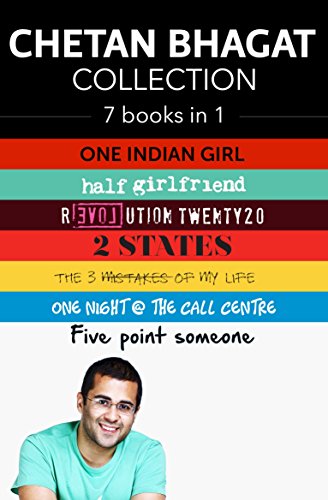
Why should we read Chetan Bhagat?

Image result for chetan bhagat


If you don’t want to read him…. that is just fine… but you can recommend him to somebody who is in the first lap of a readathon. 
He doesn’t belong to the genre of literature but is an inspiration to anyone who wants to be a writer in India.
He sells – (his books are sold like hot appams and sweetened coconut milk) – Anyone who is interested in doing a research about his phenomenal growth can do a market study and publish a paper which can be titled as – ‘The Chetan Bhagat Enigma’
 If you want to criticize Chetan Bhagat, it is ethical to read him and do it with some elan.
‘To be simple is not a simple thing’ says the Malaysian poet Ee Tiang Hong, Chetan Bhagat is simple – his language and his thoughts. 
 A perfect companion for getting the reading block out of the way. 
A perfect companion when you travel, when you wait outside the American Library for the security check in or even in the loo.
 Free-wheeling reading sessions – not need to underline any lofty thoughts or hard words.
Perfect anti-dote for the clout of intelligentsia. 
Chetan Bhagat knows the pulse of India

Sunday, 23 April 2017

What it takes to be a pro?

 
In this highly competitive world, one way to stay on the top is by becoming a professional. The word signifies quality and has been applied in different fields like photography, arts and Human Resources. This blog briefly explores the question - What it takes to be a pro? 
 
There are many epithets for defining a pro - intellient and smart, atheletic built, career oriented and ruthless when it comes to making a decision. Professionals tend to be more rational than emotional. They don’t mix personal with their professional life. Even they do that it will be done in a discreet way. The always try to update themselves with the latest trends in technology and the best practices in HR. 
 
Eventhough we treat professionalism as a positive trait, it can contain streaks of negativity also. To stay ahead in the race, professionals tend to dwell in negativity. They do things not because they want to do it but are forced to do it. They have something sinister in their outllook since they are always vying for the topmost position. They may have a Macbethian temper which propels their dreams and ambitions which vaults over the permissible limits. Do they always give value to the four golden principles of human interaction - Respect, Integrity, Ethics and Honesty. 
 
Professionalism is a great force and the only way to make it positive for the indivdual and those around him is to channelize it and make it a highly personal force. A true professional fights his war not with the outside world but with himself. 

Sunday, 26 February 2017

The world around us...

It is important that our eyes and ears are open to the world outside. There is the need for using the discretionary powers to select the news and views that we want. 

Listening to the iPlayer app in my phone is a new joy that I have discovered. I admire the rich content that the app offers especially the BBC World Service programmes. This morning, as I listened to the World News from the app I realized that the team behind BBC are full of energy and the energy is not something forced out of them but it just flows naturally and without any hindrances. 

The documentary which I listened to after the news was an interview with Angelina Jolie. The interviewer was Yalda Hakim. The interview was based on the book 'They Killed My Father' written by a survivor of the Khymer Rouge genocide. Angelina Jolie has made a new movie based on this book. She was in conversation with Yelda Hakim, who herself is a survivor of the Afghan- Russian War. She is a Afghan, her family is settled in Australia and she is living in London. 

Looking at this picture, I feel the peace and calmness of two women who are discussing a horrfic past. Angie, as she is populary known in Cambodia talks about how she adopted her first child from Cambodia. She also talks about how important is for the leader not to lose his calm in front of his team. 

Wednesday, 22 February 2017

I was born innocent..technology spoiled me...

Image source: Google


Like a thief creeping in from behind...Undetected and Unannounced - Technology has overtaken our lives. This blog is not a commentary on the physical effects of using technology but the way it effects our mind. I do agree that technology has immense potentialities but it is good to consider the following before we lie prostrate before the techno-god.

Some of the major effects are:

1) Distractions abound: One of the greatest challenges today is to keep your phone locked for a considerable amount of time. Like a thriller novel, the phone has become 'unputdownable'. It is interesting to note that the phones itself have become a tool for focusing on the task at hand. I am using this app called Forest to stay in track. 
Image Source: Premjith Mathew

2)  Less human contact:  The urge to see eye to eye for a warm conversation has disappeared. I am
     reminded of the catchphrase of a popular cafe -  A lot can happen over a cup of coffee. Today, the
     only thing that can happen over a cup is forwarding whatsapp messages and liking some
     Instagram pictures.

3)  Creates a feeling of being self-sufficient: Technology empowers you to be somebody or    
     something. It provides you with a feeling of pride and self-sufficiency. It is a pseudo feeling, I
     can vouchsafe for that. Technology is not a substitute        for hard work and persistence. It may
     help you but it can never make you think independently.

4) Mind is transformed with techno-gibberish:  The human mind should be cultivated with good         thoughts and nice memories or it is like this today's  good thoughts will become tomorrow's good 
    memories. The bomardment of the human mind with  images and words takes a toll on the      
    thinking process and creativity. You just become the receiver  and few things are thought about or 
    created. 

5) Addiction:The time has come for the governments and policy making bodies to establish de-      
    addiction centres for techno-addicts. The awareness campaign should start from the early stage  
    of schooling and continue to a level where the target audience understand the wholistic
    implications of technology.
   

Personal Recommendations to Detechnologize yourself:

1) Mindfulness 
2) Make some Sacrifice and go with the bare minimum 
3) Read the book Art of Stillness by Pico Iyer  
4) Read Focus by Daniel Goleman
5) Kill Technology with Technology 

Tuesday, 21 February 2017

The Pain of Religion


Image from Google
 

I had this conversation with my colleague about religion and how mankind positions itself in relation to religion. Being a Mathematics teacher, he used the example of a graph to demonstrate the connection between Man and GOD. He said that God is the Y axis in a graph - always standing firm and straight like a lighthouse and Man is the X axis always full of mistakes and wrongs. In times of happiness and prosperity, man always moves away from God and when calamity strikes Man moves towards the God seeking comfort and solace. This definition of the Human and the Divine serves as the right opening for this blog. 
This blog examines the relationship between Pain and Religion. There is an element of masochism and sadism invloved in this relationship. Marx said that the religion is the opium of the people ( Wikipedia) I have identifed three stages of self inflicted addiction to religion. 

Members of any established religion advocates the importance of a controlled self which again invloves some kind of agony and suffering. I am writiing this blog seated in my office in Bahrain - a place which is known as the Tourism capital of the Middle East. The main visitors are from Saudi Arabia and other neigbouring GCC's. The main activity for them, like any other toursit destinations is to sqaunder their oil wealth on women and drinks. It is in the month of Holy Ramadan that really brings out the level of self control in these tourists. All sorts of vices are prohibited in Baharain for that one month. Even smoking is banned. There should be some element of pain involved in this self controlled state. The Holy month thus becomes a time of purgation and cleansing. 

The same is true about Christianity where the followers are exhorted to observe lent for 50 days before Easter Sunday. This too invloves self control for the Christian community as they are used to act of consuming more flesh on other days. Again an act of self control. The same is the case with the 41 days fast or 'vritham' which is part of the Hindu piligrimage to temple in South Kerala. The guidelines are strict like shunning all social activies, celibacy, not applying oil on the hair or body and always carries with them a tulsi leaf to ward off evil and temptations. The pilgrim sleeps on the bed and uses no footwear to protect his feet. ( inputs from sabarimalaaayyappan.com) 

The second stage in this examination of religion and pain are the acts involoving more physical exertions and labour. In Isalm, the pilgrims undertake the Hajj to Mecca. In earlier days, the passage to Mecca was through the scorching desert. These days travel arrangements have improved but still there are risks involved due to the inclement weather conditions of Saudi Arabia. Most of the pilgrims who perform Hajj are old. They are so fragile and weak that they don't have the stamina to withstand the harshness of the event. They are ready to meet their creator and if that meeting happens in the Holy Land, they believe that it is the ultimate gift from above. The pilgrims take part in circumambulation which is one of the key elements of the Hajj rituals. It is is not just about taking a walk around the Ka'ba but it also involves other rituals which are quite tough for the elderly. The weather and the journey and the lack of food makes Hajj a difficult religious event. 

In the Christain tradition, there is the ritual of the Way of the Cross. It is a kind of re-enactment of the journey that Christ made on his way to Crucifixation. Most of the pilgrimage centres would be difficult to access. Either they will be on top of a hill or deep inside the forest. There is one chruch in Kerala which is situated on a hilltop - Malayatoor Shrine. Malayattor pilgrimage is done as a vow in reparation of sins. Some pilgrims carry wooden crosses, some carry stones on their head and place them near the shrine. Women, sometimes, carry brooms, praying for the abundance of physical and spiritual well-being. (Source: Wikipedia) 

In the Hindu tradition, the act of rolling on the ground seeking spiritual blessing is one act which mixes pain and suffering. Most of the time the pathway on which the devotees roll are not covered from the harshness of the sun, is dirty and is made of cement. There is also another strange custom which involves devotees rolling over the plaintain leaves which contain the left overs of the food. This practice is said to relieve the devotees of health issues and help them get healthier ( Source: indiatimes.com) The act of tonsuring your head is also another example where the devotee inflict some kind of physical harm on his body. The devotees sometimes burn camphor which is kept on the palm of their hands as an offering to God. ( Source: www.ncbi.nlm.nih.gov) 

The third stage is the harshest one where the body is subjected to harsher treatments. The case of Shia Muslims during the annaul festival of Muharram. They use blades on chains inflict injuries on themselves. The self-flagellations are intended to atone for the sins committed by their forefathers. This is done alomost for one full week. It is indeed a horrifying scene to see all the worshippers moving through the streets with blood covered bodies and shouting religious slogans. 

Mortification of the flesh is practiced in Christianity include flagellation in imitation of Jesus of Nazareth's suffreing and death by crucifixation (Source: Wikipedia) Pope John Paul II, who died un 2005, regularly used to whip himself according to the Polish nun who looked after him.  In Dan Brown's The Da Vinci Code, for instance, the murderous albino monk, Silas, is depicted flagellating himself while praying. (Source: Daily Mail)

In Hinduism, there are cases where metal rods driven through the tongues of the devotees to purify their souls. The ritual sometimes also include the insertion of iron hooks into the skin, free falling from high platforms and hanging upside down over fiery pots to frenzied drum beats. (Source: www.independent.co.uk) Another act of pain found in Hinduism is Thimti in which devotees walk on a fire pit which is prepared the night before and kept red throughout the day. It is found that this and similiar rituals can result in feelings of euphoria for participants. (Source: Wikipedia) 

This blog is an attempt to chronicle the acts of inflicting pain, disfiguration, and agony on the human body in the context of religion. These illustrations clearly shows that the religion which is supposed to be a path of peace of love uses violence and pain as a means to make the followers find the true essence of God.