Saturday, 21 March 2020

The Devotion of Suspect X - Review


Image result for devotion of suspect x

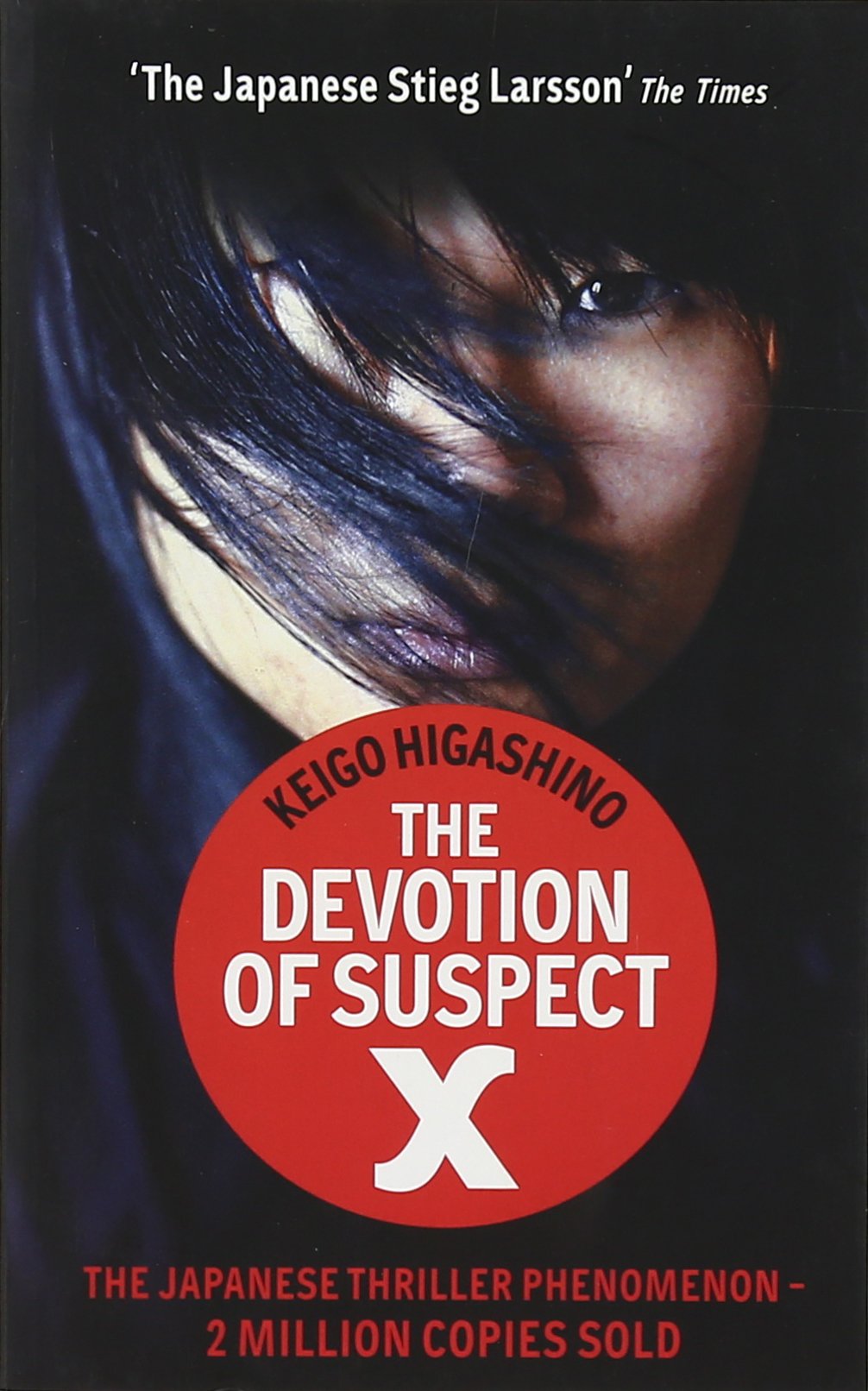
This week ‘Books and Authors’ will feature crime and mystery novels from my library. The first novel that I would like to discuss is ‘The Devotion of Suspect X’ by the Japanese author Keigo Higashino. I got introduced to this author 2 months ago through an old friend of mine from MCC. Keigo Higashino is known for his mystery novels. Most of his books have been turned into films and T.V series. He started writing novels while still working as an engineer at Nippon Denso company. The book that I am introducing today is the second highest-selling book in all Japan. It won the prestigious Naoki Prize for Best novel which is the Japanese equivalent of the National Book Award and the Man Booker Prize. The story involves a mathematician and his neighbours. The life of Ishigami, Yasuko and her daughter Misato get entangled in this novel. The reader also is treated to some valuable insights about Mathematics and Education. There is also the celebration of academic camaraderie between two mathematicians, Yukawa and Ishigami. There are references to mathematical geniuses like Arthur Cayley and Paul Erdos. There are some interesting insights based on the art of teaching and learning. Sample these lines – ‘Yet too many teachers refused to answer simple questions of relevance from their students. No, Ishigami thought, they probably aren’t able to answer them. They taught without really understanding their subjects, simply following a set curriculum, thinking only of coaxing a passing grade from the students so they could send them on their way to make room for next year’s flock. Questions like Morioka’s would have been nothing but an irritation to them’.

You can also trace the true ‘inspiration’ for the Malayalam movie ‘Drishyam’ which was later made in Tamil as ‘Papanasam’. This book inspired the Japanese director Hiroshi to make a movie titled – Suspect X which in turn inspired the Korean movie – The Perfect Number (2012) and since most Indian filmmakers watch Korean movies, Drishyam came out  in the year 2013 followed by Papanasam in 2015. 

Wednesday, 11 March 2020

Enigma - Hugh Sebag-Montefiore

Image result for Enigma - Hugh Sebag-Montefiore

Like a good book, a visually rich film mesmerizes the human mind for some days. The movie I am referring to is 1917 which I saw yesterday. Based on the WW1, the movie is a good ‘textbook’ for both history and literary lovers and is also technically perfect as the whole movie is composed of a single camera shot. Today’s Books and Authors present a book which is based on the Enigma machine which was used by the German navy to take out the English ships. The book is titled as Enigma - the battle for the code. The book delves deeper into the story of the Enigma machine and it will be an interesting read for individuals who are curious about the past. The book takes us beyond the scenes from the movie - Imitation Game which chronicled the life and times of Alan Turing. It is a commonly held belief that Alan Turing broke the code and saved hundreds of British U-boats and ships. The book tells us that the encoding the Enigma machine happened due to the sacrifice of ordinary British seamen who risked and sometimes lost their lives in the battle for the code. They are the ones who captured Enigma codebooks and manuals which led to the team at Bletchley Park to break the code. The capture of the Enigma spy, Hans Thilo Schmidt also was also an important step towards the cracking of the code. Bletchley Park is an important historical site and to quote from the website https://bletchleypark.org.uk. ‘Bletchley Park is a place of exceptional historical importance. It remains highly relevant to our lives today and for the future. It is the home of British codebreaking and a birthplace of modern information technology. It played a major role in World War Two, producing secret intelligence which had a direct and profound influence on the outcome of the conflict’.

Tuesday, 10 March 2020

Fluid by Ashish Jaiswal

Image result for fluid by ashish jaiswal

A book for both educators and learners. It is based on ‘Vishnudharmottaram Puranam’. The book begins with the story of Malvina Reynolds. She, in her early fifties, attended the University of California, Berkeley to study music theory. The society always told her that she cannot go to the universities at the age of fifty. Malvina wrote on upholding the rights of women, equality against nuclear testing, protecting civil right, shopping wars and many such themes. In her seventies, Malvina was doing around 20 concerts a year ago and against the advice of many, she continued to perform until shortly before her brief illness and death. 

Malvina didn’t act as per the perceptions and myths of the world. Malvina was more than what she was taught to be. The book also has some interesting references. There is a reference to The Fountain Head by Ayn Rand and the character Howard Roark who refused to become a mere follower or ‘the second handlers – those who simply copy and do not have the courage to produce original designs. There is also reference to the Ramones and their song- It’s not my place (in the 9-5 world) - I took a 3 minute and 23 seconds break to listen to the song.  There is also reference to the spinning doctors to check whether you are a left-brained person or a left-brained person.

The literary reference to V.S Naipaul is quite interesting. He said that he would have become a better person if he had studied profoundly. The author, Ashish Jaiswal also talks about the life and times of scientist and novelist Charles Percy Snow who is the author of ‘The Two Cultures and Scientific Revolution’ – Snow had a very interesting lifestyle. In the morning he would interact with scientists and evening he will discuss ideas with a circle of friends. The book Fluid is all about challenging boundaries. The book contains stories of people who refused to jail themselves inside the boundaries of one or the other island. They built their own hypothetical boats and sailed in search of new knowledge. The author calls them – ‘fluid thinkers. These were adventurers, unafraid to weather the stormy oceans, which existed in the form of threats and mockery from those who remained stuck with their existing learning. These wanderers travelled from one island to another without a set path, without a map, without the fear of failure – learning freely, challenging the existing world views and eventually changing the course of human history. 

Monday, 9 March 2020

Jack Kerouac - On the Road - Book Review

Image result for Jack Kerouac - On the Road 

The book contains a detailed introduction about the creation of this novel. Bob Dylan paid rich tributes to this novel when he said, “It changed my life like it changed everyone else’s”. The introduction is prepared by Ann Charters who started collecting books written by Beat writers when she was a graduate student at Columbia University. She was part of the audience which had gathered to listen to Allen Ginsberg when he gave the second public reading of ‘Howl’. After completing her doctorate, she worked with Jack Kerouac to compile his bibliography. She is the one who first wrote the biography of Jack Kerouac (pronounced as care-ooo-ack) The introduction begins with the description of Joyce Johnson and Kerouac waiting near a newsstand on the midnight of September 4th, 1957 for the New York Times. Jack was informed that the review of his novel ‘On the Road’ will appear in that day’s newspaper. Standing under a street lamp, they read the review which described ‘On the Road’ as ‘an authentic work of art’ which is ‘beautifully executed’ and contains ‘the clearest and most important utterance’... ‘of the beat generation’. Jack Kerouac was described as the ‘principal avatar’ of the Beat generation. The ‘Village Voice Reviewer’ describes the book as ‘the rallying cry for the elusive spirit of rebellion of these times.’ The introduction continues to describe the way the novel was written. ‘On the Road’ is all about how Kerouac found ‘a personal voice’ and he was thirty-five years old when the novel was published. Just like Benyamin met Najib and wrote The Goat Days, Kerouac met Neal Cassady who is the inspiration for his character Dean Moriarty. The first version of the novel was a cheap imitation of the style of Theodore Dreiser. Kerouac wanted the novel to be a quest novel like Cerventes’s ‘Don Quixote’ and John Bunyan’s ‘Pilgrim’s Progress’. 

Sunday, 8 March 2020

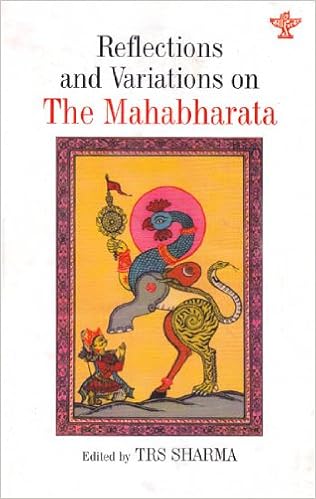
TRS Sharma - Reflections and Variations in The Mahabharata


 Image result for TRS Sharma - Reflections and Variations in The Mahabharata

The book is based on the papers read during the International seminar on the Mahabharata: tests, Contexts, readings held by Sahitya Akademi, New Delhi as parts of its Golden Jubilee celebrations. The book contains 24 essays and articles The Mahabharata is described as a leviathan of an epic which is three times the size of Iliad and Odyssey put together. The epic is not treated as history but as a literary work which contains various complementary and contradictory elements. The epic in its first stage of growth called ‘Jaya’ contained some 8000 or so verses and its second stage expanded to 24,000 stanzas. The third stage it grew into what we now have with nearly 100,000 stanzas. The book also explores how, Siva, Rama and Krishna have become not only Indian cultural icons but are also part of the Hindu collective imagination. Various rewritings of the epic in various Indian languages are also discussed. The re-readings of the epic in Bengali was done by Buddhadev Bose with his well-known version known as ‘Mahabharater Katha’. The two novelists in Malayalam who tried to re-write the epic are P.K Balakrishnan and M.T Vasudevan Nair. There are also essays/articles about the Konkani version and Kannada version of the epic. In Marathi, one prominent work of interpretation is ‘Astika’ by Sane Guruji. In Hindi, the play by Dharmavir Bharati titled Andha Yug presents a modern version of the epic. The Kannada novel ‘Parva’ by S.L. Bhyrappa, and ‘Grandmother’s Desires’ by Kumudini (Real Name: Ranganayaki Thatam) are also mentioned in the book. 

Saturday, 7 March 2020

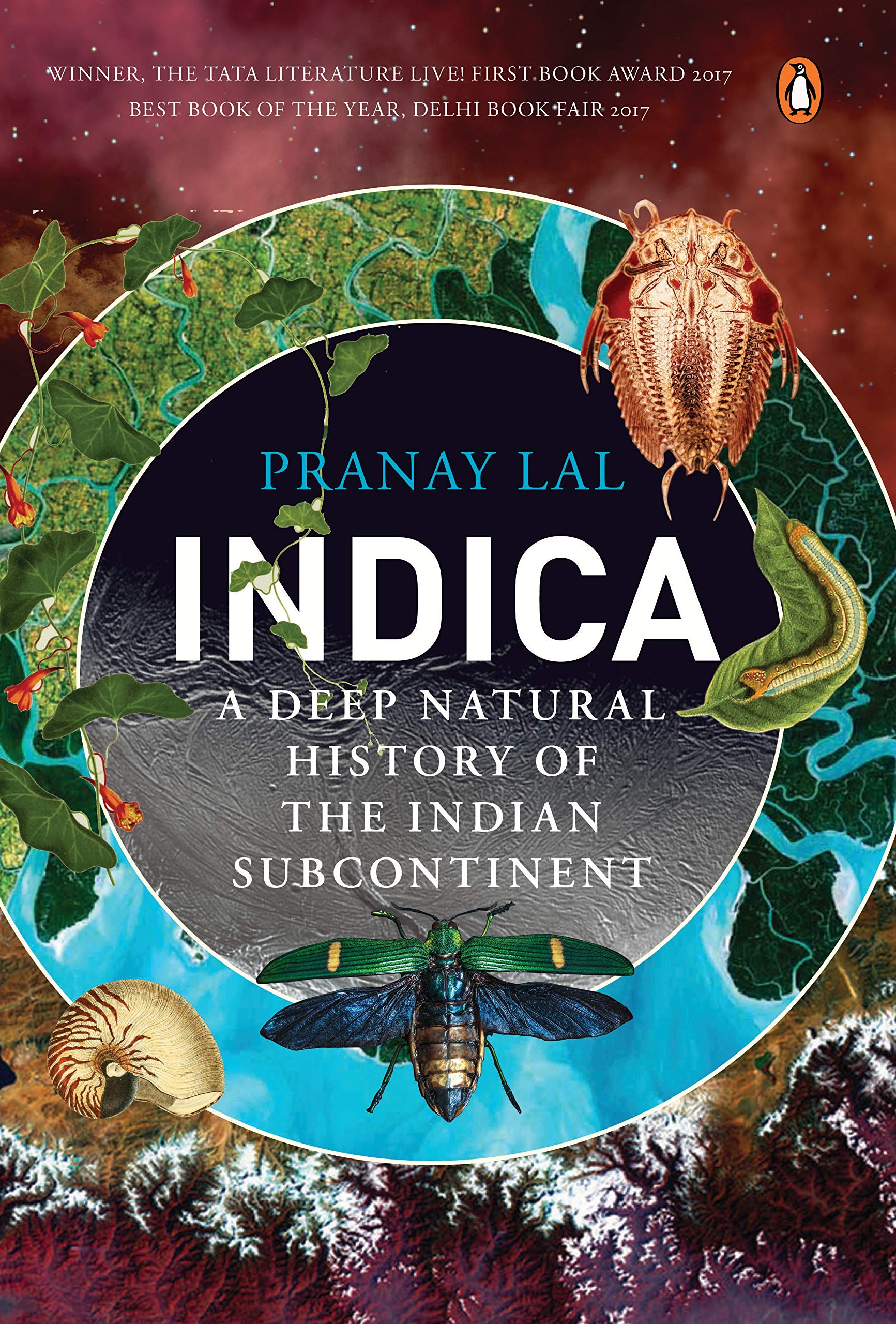
Indica - A Deep Natural History of the Indian Subcontinent - Pranay Lal


Image result for Indica - A Deep Natural History of the Indian Subcontinent - Pranay Lal

20 years of research, travel, conversations, and interviews have gone into the making of this book. The book is hailed as the first definitive natural history of the Indian Subcontinent. The author begins the book with a personal note to the reader in which he discusses his love for nature. He recollects the days he has spent examining stones and logs, climbing trees, swimming in ponds. As a child and as an adult, he is excited about the ways in which nature constantly work and how everything is related to each other. He also pays homage to true scientists/researchers who are like explorers. They work tirelessly, excavating through layers of rocks and sediment. He celebrates these discoveries in this book. He starts the journey to discover the beginnings of the Earth and India at Nandi Hills in Mysore. He invites the reader to look at ‘the grey rock that glistens darkly in the rain’ He tells us that the rock belongs to the family of rocks called the Dharwar Craton which was formed 3.5 million years ago. The author then takes us around India to provide examples of different rock formations keeping the tale of how the Earth was formed as a background. His passion for geology is quite evident when he says that if we take a train from Bengaluru to Jammu, more than the 2700 kilometres that we may cover, it is the 3 million years of Earth’s history that we will uncover - just by simply looking out of the window. The book with its 15 chapters has beautiful illustrations and detailed maps to complement the narrative.

Friday, 6 March 2020

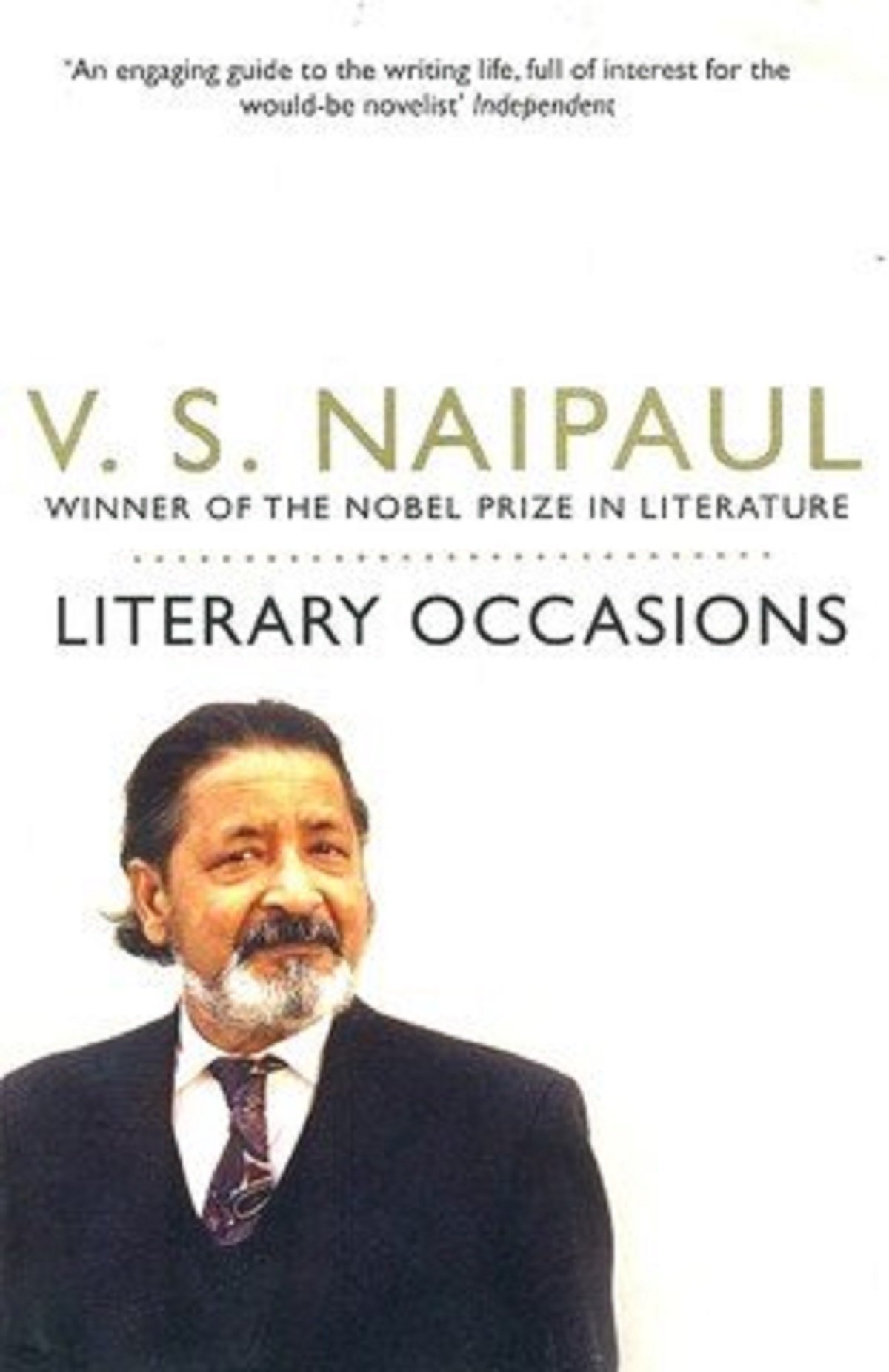
V. S Naipaul - Literary Occasions - Book Review


Image result for Literary Occasions

A collection of 11 essays by the Nobel Prize author about his writing life and the experiences that shaped his writing. The introduction of the books is prepared by Pankaj Mishra (Indian essayist and novelist) In his introduction, Mishra explains the ‘intellectual colonialism’ that happened in Russia which was beautifully described by Pyotr Chaadev in his series of letters known as ‘Philosophical Letters’. In the letter, he denounces the cultural isolation and the mediocrity of Russia along with the intellectual impotence of the Russian elite. He says, “Our memories reach back no further than yesterday and we are strangers to ourselves.” He was making fun of the Russians who looked up to Western Europe for cultural direction. Pushkin in his poem makes his protagonist wonder whether if the truth is somewhere outside him, perhaps in some other land, in Europe for instance. These comparisons with Russian literary scene are used to introduce the literary context in Trinidad where V.S. Naipaul’s father Seepersad worked as a journalist after making a long journey away from his peasant origins. He suffered for want of a literary tradition. Trinidad was small, politically unimportant and geographically isolated from the rest of the world. It wasn’t much encountered in print and like his father, Naipaul also found it very hard to write about the land. Naipaul says “Great novelists wrote about highly organized societies. I had no such societies…I didn’t see my world reflected in theirs” It took many years for Naipaul to free himself of this metropolitan tradition to find the courage to write about the Port of Spain street he knew. His first publishable book was ‘Miguel Street’. Literary Occasions has a companion piece ‘The Writer and the World’ which discusses writers such as Kipling, Gandhi, Nirad C Chaudhari, Conrad and R.K Narayan. 

Thursday, 5 March 2020

Ruskin Bond - Lone Fox Dancing - My Autobiography - Book Review

Image result for Lone fox dancing
The books begins with three quotes - ‘ There may be no pot of gold at the end of the rainbow, but if a man believes with all his soul that there is, and spends his life in the effort to vindicate that belief, his efforts will surely bring him somewhere at last; perhaps to a brighter goal than even the rainbow’s end.’ - Aylward Edward Dingle - A Modern Sinbad. The second quote is from Sir Richard Burton - ‘From none but self expect applause’. The third quote is from Rabindranath Tagore - ‘Across the boundaries of life and death/There you stand, O friend of mine.’

In the dedication and acknowledgement section, he says that even a fox needs a family referring to the adopted family of Rakesh and Beena who has looked after him these many years. He feels that he is part of the greater world; of India and the planet Earth and the infinite worlds beyond. He confesses that he decided long ago to stop trying to grow up. He declares that at the same time ‘he is a young boy and an old writer’, without any regrets. He says that almost everything he has written has been drawn from his own experiences. Thus, fragments of his autobiography are scattered everywhere, in his novels, stories, essays and poems. Some of the vignettes from his childhood revolves around food. He loved mutton kofta, and desserts like Gulab jamun, jalebis, rasagullas and laddoos and had the habit of washing them all down with a glass of lemonade. The stories he heard from his ‘ayah’ and the cook Osman stayed in his memory. He was named as Owen Ruskin Bond by his father after the famous Victorian writer and painter, John Ruskin. Owens means warrior in Welsh. His father’s taste for photography and music had an influence on him in his later life. Before they packed their bags from Jamnagar to Dehra Dun, young pleads with his father to take the gramophone with them. His love for railways also was nurtured due to the constant shifting of homes, from plain to hills and then back to the plains. His habit of walking was also developed in Jamnagar because it was full of spacious palaces, lawn and gardens. He describes his autobiography as ‘story of a small man, and his friends and experiences in small places’

Wednesday, 4 March 2020

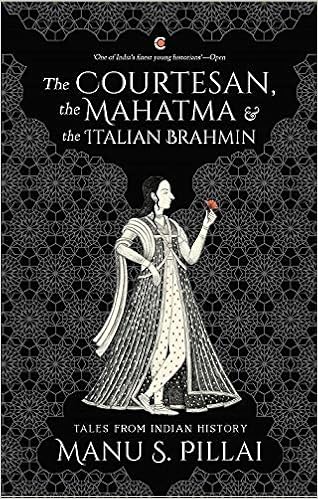
Manu S Pillai - The Courtesan, the Mahatma and the Italian Brahmin - Book Review

Image result for the courtesan the mahatma

A collection of essays by one of the young historians of India. The book is divided into three parts - The first part is titled as - Before the Raj, the second part as Stories from the Raj and the third part is the Afterword which contains the sources and list of further reading. In a single page introduction, (a rare thing for a book which has 350+ pages) the author discusses the need to study history in the context. He also encourages each reader to draw her own conclusions because the objective of the book is just to light the way. For want of time and ease of reading, I will share ideas from three essays. The first one is the story of the Italian Brahmin - An Italian Jesuit who came to Madurai to convert. Since the European missionaries were dismissed as unclean, Roberto de Nobili decided to give up his cassock for the ochre garb of a sanyasi. He famous pronouncement was ‘I will become a Hindu to save the Hindus’ in 1646, he was transferred out of Madurai and died, blind and ten years later in Mylapore. The second tale is about the courtesan who became a princess. The name of the courtesan is Begum Samru. She was transformed into a warrior by her husband Walter Reinhardt. She was an intelligent woman who played the right cards with the power centres to make sure that she stayed in the upper echelons of power. She was in charge of the province known as Sardhana in the present-day U.P
By the time she died in the year 1836, she was one of the richest women in India. The third tale about Mahatma. Manu talks about the ironical situation when the body of Mahatma, who was an advocate of non-violence, was taken through the streets of Delhi with a scene of dramatic military display. Policemen were stationed at every nook and corner, along with around 4,000 trained men of war. His body itself was taken around on a gun carriage. Even the life of Mahatma was ridden with ironies. Hope you will grab a copy of this wonderful book and experience for yourself the lucid and captivating style of historical narration of Manu.S. Pillai. 

Olive Again - Book Review

Image result for Olive again

Today in the series Authors & Books, I would like to introduce the book ‘Olive, Again’ by the author Elizabeth Strout. The book was featured in the Oprah Book Club in Apple TV+. The novel is set in a fictional town known as Crosby, Maine. Maine is home for many creative minds like Henry Wadsworth Longfellow, Stephen King and Harriet Beecher Stowe. This is the second book discussed in the Oprah Book Club on Apple TV+. The first book discussed was The Water Dancer by Ta-Nehisi Coates which dealt with the themes of racism and with some hard-hitting views about Thomas Jefferson. 

‘Olive, Again’ the second book after the novel ‘Olive Kitteridge’ (The novel won the 2009 Pulitzer Prize for Fiction) is a novel which talks about kindness, empathy, and remorse. The author says that she writes to make people aware that they are not alone, and life is sometimes uncomfortable. One of the participants who is from Somalia tells the book club members that it is very rare for White authors to write about refugees and discuss the theme of diversity. ‘’The novel is an acknowledgement of humanity’’ says the participant. One of the main themes discussed in the novel is ‘loneliness’. Oprah and her team while doing research for this session discovered the fact that the word loneliness is the most googled word especially during the night. The writing is visual and stunning and Olive tells us ‘to keep going’. One of the surprises in the book session was when Oprah introduced the first woman Governor of Maine. ‘We love a governor who reads’ Oprah announces in an excited manner. 

Thursday, 23 January 2020

Books and Authors # 2 - Lucknow Boy - A Memoir by Vinod Mehta


The book has two dedications. The first one is from George Orwell - ‘An autobiography is only to be trusted when it reveals something disgraceful’ and the second dedication is based on the quote by W.B Yeats - But I, being poor, have only dreams;/I have spread my dreams under your feet;/Tread softly, because you tread on my dreams.

In the Introduction, the author says that he always wanted to answer the question - ‘What kind of person do I wish to be?’ He was not bothered about existential questions like ‘Who am I?’ or ‘Why am I here?’ He never had a religious or political text as a guide. He decided to chart his own individual course, frame his own ‘ten commandments’. Even though he admired Nelson Mandela, Mother Teresa, Jawaharlal Nehru, Swami Vivekananda, Bertrand Russell, he believed that ‘all of them had random shortcomings. He wants to be known as ‘a decent human being’. He quotes the dictionary meaning of the word ‘decent’ which is ‘a person or a thing which is considered to be of acceptable quality’ He quotes Hamlet to drive home his idea of a decent being - ‘This above all: to thine own self be true/And it must follow, as the night of the day/Thou canst not then be false to any man.' He admits that he had to fight against self-pity and envy in his attempts to be a decent being. 

Vinod Mehta passed away in the year 2015. He worked as an editor for more than 40 years. He says that the only weapon an editor possesses is his publication. He concludes the introductory remarks with these words - ‘My terms as I have explained, are neither sainted nor irreproachable, but they allow me to sleep peacefully at night’. 

Wednesday, 22 January 2020

Books and Authors # 1 - Apollo's Legacy - Perspectives on the Moon Landings


Would like to share some key ideas from the book - Apollo’s Legacy - Perspectives on the Moon Landings by Roger D Launius. These ideas are culled from the prologue of the book. The chapter begins with the description of the first moon landing. “The astronauts who first landed on the Moon half a century ago carried with them the hopes and wishes of all whom they had left behind on Earth, as well as uncertainty about what they would experience on the lunar surface.” The name of the Lunar module (LM) was code-named Eagle - Neil Armstrong and Buzz Aldrin travelled in the weirdest looking contraption ever to invade the sky. The first words ever spoken on the Moon were ‘conflict light’ - as a sensor on one of Eagle’s legs had encountered the surface and triggered a light inside the lander. Armstrong called Mission Control and said ‘Houston, Tranquillity Base here, the Eagle has landed’. Armstrong later admitted that he had he misstated the famous line - “That’s one small step for [a] man, one giant leap for mankind,” It all happened in the excitement of the moment. Both Armstrong and Aldrin in their two hours moonwalk had a lengthy list of duties to perform. They both were like a five-year-old boy in a candy store. They had to collect rock and soil samples, unfurl the American flag in the lunar surface, salute it and take pictures. They also left a plaque there which read: “Here men from the planet Earth first set foot upon the Moon - July 1969, A.D. We came in peace for all mankind”

The prologue reminded me of the following cultural references:

1. The character of Buzz Lightyear in the Toy Story series
2. The MoonWalk dance of Michael Jackson
3. How the Native Americans occupied Alcatraz Island as part of the Red Power movement in
         1969. The same year the US started its interstellar expansion.
4. The Moon-landing deniers and their theories.
5. The celebration of the 50th year of Moon Landing.

The three-member team consisted of Armstrong, Aldrin and Collins. After his return from the lunar mission, Armstrong taught Aerospace Engineering at the University of Cincinnati. 

Aldrin was an extrovert person and he enjoyed the spotlights and the camera. Aldrin held a PhD in Astronautics from the Massachusetts Institute of Technology. He was an expert in manoeuvering, rendezvous and docking of two space crafts in Orbit. His work in Extra-Vehicular Activity ( EVA) or spacewalking, made it possible for astronauts to depart their spacecraft and undertake pioneering work in the vacuum. 

Collins remained in the Columbia command module orbiting the life-less grey orb. He talks about the fragility of Earth as he viewed it from the perch. 

'From the space, there is no hint of ruggedness to it, smooth as a billiard ball, it seems delicately poised on its circular journey around the sun and above all, it seems fragile' 

Armstrong was known for his modest practicality. Aldrin for his boisterousness and Collins for his sensitivity and self-reflection. 
They were only the point of a spear made of thousands of NASA engineers and scientists, managers and administrators, clerks and technicians. There were comparisons made between Christopher Columbus and Neil Armstrong.  

In the case of Moon Landings, memory operates in many powerful ways. Most remembrances of the landings have been dominated by a celebratory perspective, one emphasizing the uniqueness that is America as it overcomes challenge and adversary. The successful Appolo program can be viewed as a representation of American history writ large and indeed has become the standard way to remember it. The dominant American perspective on the past is sustained. 
Each of these recollections of Appollo the mainstream one and those from the left, the right and fringes has its place in the American consciousness. The ways that Apollo has been remembered over the five decades since the Moon landings and bringing to the fore the passionate cultural debate. 

Saturday, 21 December 2019

The Universality of Music and Literature

‘Thou dirge 
Of the dying year, to which this closing night’
(https://www.poetryfoundation.org/poems/45134/ode-to-the-west-wind)

Shelley imagines the West Wind singing the dirge for the dying year in the poem “Ode to the West Wind”. Shelly believes that the dying year will always lead to hope and regeneration. As the year 2019 comes to a close this blog celebrates the musical spirit of the season. There is the jingling sound of the Christmas chimes and bells in the air. This music or the chanting is universal as Shelley describes in the last stanza of the poem. He wants the West Wind to scatter his words and thoughts in the world. This is a typical trait of the Romantic poets who firmly believed in the dictum of 'personal to the universal'.  Even though the poet is falling on the thorns of life and bleeding, he is willing to influence the world with his ideas and thoughts. 

“by the incantation of this verse, 
Scatter, as from an unextinguish'd hearth 
Ashes and sparks, my words among mankind!”
(https://www.poetryfoundation.org/poems/45134/ode-to-the-west-wind)

The universality of music is discussed in the article which appeared in the Science magazine which was followed by newspaper reports. The study on music reveals that the songs covering different languages and ethnic groups across the world show common behavioural patterns. The research area which studies the music of different ethnic groups is known as ethnomusicology. The research covered more than 300 societies across the globe. The researchers have discovered that the ethnic groups share common musical behaviours such as infant care, healing, dance, love, mourning and warfare. The Highland Scots in Scotland, Nyangatom nomads in Ethiopia, Mentawai rain forest dwellers in Indonesia, the Saramaka descendants of African slaves in Suriname and Aranda hunter-gatherers in Australia. The ethnic groups which were included in the study are some of the ethnic that were covered in the research. The study proves that songs sharing similar behavioural functions have common musical features. 

Would like to conclude this blog by mentioning the recent collaborative musical work by U2 and A.R Rehman titled as Ahimsa which has both English and Tamil lines. The track was released in connection with the U2’s concert in Mumbai two weeks back. 

Sunday, 1 December 2019

William Wordsworth and The Solitary Reaper


He was born in England in the year 1770. William Wordsworth is famous for his nature poems. His poems described the scenic beauty of nature in England and Scotland. 'I Wandered Lonely as a Cloud', commonly known as 'Daffodils', is one of the most famous poems in the English language and it is considered a classic of English romantic poetry. He is known as the poet of nature. All his poem describes his love for nature and the bliss that he found in nature. His most famous are: The Prelude, The Solitary Reaper, Ode: Intimations of Immortality, Lucy Gray, Lines Composed A Few Miles Above Tintern Abbey, etc.

Quotes from William Wordsworth: 

“My heart leaps up when I behold A rainbow in the sky: So was it when my life began; So is it now I am a man”

“The child is the father of the man.”

Sources used for this biography
https://www.britannica.com/biography/William-Wordsworth/The-Recluse-and-The-Prelude

Leo Tolstoy and Little Girls are Wiser than Men


He is a Russian prose writer and novelist. He is famous for his two novels – War and Peace published in the year 1869 and Anna Karenina which came out in the year 1877. He is a master of realistic fiction and one of the world’s greatest novelists. A novel by Tolstoy is not a work of art but a piece of human life. Tolstoy was a man of peace. He wrote many good stories. Each story has a valuable moral lesson. Little Girls are Wiser Than Men' is a short story by Russian author Leo Tolstoy first published in 1885. It takes the form of a parable about forgiveness. The lesson is a fable. A fable is a short story which conveys some useful moral lesson. The story talks about forgiveness and non-violence. Tolstoy and Mahatama Gandhi used to exchange letters. Some of the memorable quotes by Tolstoy are given below.

"In our world, everybody thinks of changing humanity, and nobody thinks of changing himself."

"The two most powerful warriors are patience and time."

"The sole meaning of life is to serve humanity."

"The strongest of all warriors are these two — Time and Patience."


Resources used for preparing this blog:
https://fee.org/articles/12-quotes-from-leo-tolstoy-on-truth-violence-and-government/
The Oxford Companion to English Literature - Edited by Margaret Drabble
Google Image

Little Girls are Wiser than Men - Task 1


https://www.pinterest.com/terrihughes7/little-angels/
Arrange the following events in the order they appear in the story:
  1. Akulya splashed muddy water on Malasha's dress
  2. Akulya’s mother came to support Akulya and both the mothers started fighting
  3. An old lady tries to tell them to stop, but she is ignored.
  4. Everyone calms down and goes home. 
  5. In the meantime, the two little girls continue to play joyfully with the 
  6. muddy water.
  7. Malasha's mother noticed how her dress was dirty and scolded her and 
  8. angrily slapped Akulya.
  9. Moral of the story: Everyone should be like the little children, forgetting our worries and refrain from holding grudges, only then we will reach the kingdom of heaven. 
  10. The muddy puddle on the road attracted their attention.
  11. The old lady points to the young girls and tells the people not to bother 
  12. fighting.
  13. Tolstoy ends his story with a quote from the Bible
  14. Two neatly dressed girls, Malasha and Akulya, meet after church on Sunday

Solitary Reaper - Summary


The poet, in the first stanza, invites the reader/listener to look at the Highland Lass who is singing a song standing alone in the field. She is gathering the crops and she is also singing a beautiful song. The poet asks the reader/listener to either stop and listen to the song or leave the place gently. The solitary reaper is cutting, and she is also binding the grain. Her song has got a melancholy tune to it. The whole valley is filled with the intense song of the girl. 

In the second stanza, the poet compares the song of the girl to the nightingale’s song. The song is more appealing than that of a nightingale. It is so soothing to the tired travellers taking rest in the shade of the Arabian sands. In the same stanza, the poet compares the song to that of the Cuckoo bird. The singing of the girl is so thrilling that it even broke the ‘silence of the seas’ which lay beyond the Hebrides. 

In the third stanza, the poet is guessing the topics/theme in the song of the reaper. He says that the sad song maybe is about ‘old, unhappy, far-off things and old battles’. The second guess is that the solitary girl is singing about some ‘ordinary sorrow, loss or pain which might have happened in the past and may happen again in the future.

The fourth stanza is about the way the poet left the valley. The poet says that the girl’s song didn’t have an ending. He saw her singing at work, bent over the sickle. He listened to her song, without moving. As the poet moved away, he carried the song in his heart and afterwards the song disappeared. 

Little Girls are Wiser than Men - Summary


It was the time of year when the snow started to melt and make nice mud puddles in the street. Two girls, Malasha and Akulya, meet after church on Sunday. Their mothers had dressed them neatly. There was a muddy puddle, and the girls just couldn't resist.  They were careful at first, but eventually, Akulya splashed on Malasha's dress. Malasha's mother noticed how her dress was dirty and scolded her. Malasha, of course, blamed Akulya so the mother slapped Akulya on the back of the head. That made Akulya cry, and Akulya's mother came to her defence. Both mothers argued heatedly, and then the men came out and joined in the argument.  Eventually, a whole crowd was arguing, almost coming to blows over this incident. An old lady tries to tell them to stop, but she is ignored and practically knocked off her feet. In the meantime, the two little girls continue to play with the muddy water and joyfully follow a piece of wood they put into the muddy stream they had dug. The old lady points to the young girls and tells the people not to bother fighting, the little girls themselves have forgotten about it and are playing again and that the others should follow their example. Everyone calms down and goes home. Tolstoy ends his story with a quote from the Bible: "'Except ye turn, and become as little children, ye shall in no wise enter into the kingdom of heaven." (Matthew 18:3) This statement means that unless you change and become like little children, who forget their worries and refrain from holding grudges, you shall not reach the kingdom of heaven. Children readily forgive and forget, and adults need to do the same. Russian author, a master of realistic fiction and one of the world’s greatest novelists. Tolstoy is best known for his two longest works, ‘War and Peace’ and ‘Anna Karenina’. A novel by Tolstoy is not a work of art but a piece of life. 

Monday, 25 November 2019

10 Lives and 10 Books..

The following information is gleaned from the Weekly Quiz that appears in the Hindu Literary Review. On 24-11-2019, the quiz featured Life writings - autobiographies and biographies. Here is a list of books written by people about their lives or someone else's life. As a preface to the Quiz, the curator @bertyashley gives a meaningful quote - 'Biography should be written by an acute enemy' - Arthur Balfour. 

An autobiographical account of an animal that a little girl had a love for Black Beauty by Anna Sewell

A cricketer who was a qualified doctor is celebrated by the biographer Richard Tomlinson in the biography titled- Amazing Grace by W.G Grace

British Comedian and writer David Mitchell wrote a memoir about his childhood, schooling and career. The title of the memoir is Backstory 

This exiled religious leader who sought asylum in India wrote two autobiographies - Freedom in Exile and My Land and My People - He was also awarded the Nobel Peace Prize. The name of the author is Dalai Lama. 

Sunny Days is the autobiography written by Sunil Gavaskar. 

Tall, Dark and Gruesome is the autobiography of Sir Christopher Lee. 

Corey Feldman, the American actor and performer wrote his autobiography titled - Coreyography. 

A Prison Diary is the autobiography written by an author whose books are all bestsellers. His name is Jefferey Archer. 

Gene Simmons is the bassist and co-founder of rock band Kiss. His autobiography is titled Kiss and Make-up. 

Jim Moir who is popular by his stage name Vic Reeves published his autobiography titled Me: Moir. 

Wednesday, 20 November 2019

Gospel of Yudas - K.R Meera

K R Meera and Writing 

In the Gospel of Yudas, K.R Meera weaves a tale of intense female experience which is a result of her rich journalistic life coupled with her writerly ambitions. K.R Meera is the first woman to be hired by the newspaper Malayala Manorama. K.R Meera’s popular novel Aarachar - Hangwoman is also highly female-centred and it narrates the story of the first woman executioner. A highly socially committed writer, she has developed a craft which appeals to both the high -literature followers and the masses. She believes that writing is a way to repair her own life. She describes her act of writing as an act of revenge against the treatment of women in the patriarchal society. When she writes, her mind is so embedded in the experience of the character. One can see three types of trauma when it comes to K.R Meera’s craft - The trauma that she feels when writing, the trauma embedded in the story and the trauma of the reader who is reading. Her tales doesn’t have any ‘cushioning effect’. She reminds us of Tolstoy who was a pioneer of realistic fiction. The novel is intense and dark. Since she is a felt-writer K.R Meera says that she needed time to get out of the mould of the characters that she has created.K.R Meera talks about her experience of writing hard-hitting realistic stories as ‘not an easy task because I had to experience everything in every cell of mine'. 

Themes of Death: 
One of the primary themes in the Gospel of Judas is the theme of death. Das the character is busy dredging dead bodies from the river. He does this act in different rivers and different river banks. These acts make him an archetypal figure engaged in a routine which reminded me of the myth of Sisyphus and the story of Naranath Bhranthan in the Malayalam folklore. He is known as the Crocodile (Croc) Yudas for his diving skills. He is an amphibian living in a thatched hut on the river bank and spending too much time in the water. Most of the deaths happening around him are suicides. The dead bodies that are taken out of the river as shapeless and formless due to the nibbling away of flesh by fishes. The way Das is etched bring to our mind the character of Najeeb Muhammad in Benyamin’s classic Aadujeevitham. 

The theme of Guilt: 
Like Dr Faustus in the 12th scene of Marlowe's play, Yu-das is yearning for redemption. His sin, like that of Lord Jim, is that he had betrayed his Naxalite comrades during the Emergency period raids and the subsequent torture in the infamous Kakkayam camp. Yu-Das lives in his world of guilt and pain, haunted by the memories of his past. The novel begins with the admission of this guilt which like an albatross is hanging on his shoulders. 
"A traitor can never sleep. His hunger is eternal; his thirst, insatiable. The burning inside his body won’t be doused even if he immerses himself in water. No matter how hard he tries to drown himself in alcohol, he remains intensely conscious". Meera, K R. The Gospel of Yudas (p. 3). 

The theme of Love:  
The character of Prema is the mouthpiece of the author. She is an independent woman who makes decisions of her own. She has seen her father as a terror figure who used to engage in domestic violence. The violence became a routine for Prema once he retired from the Police department. He was on duty at the Kakkayam police camp which specialized in different torture forms. The most infamous form of torture was the 'roller'. After retirement, he suffers from Post-traumatic stress disorder. Towards the fag end of his life, he becomes bedridden with Parkinson's disease. He is the one who identifies Yudas as Das. Prema like the housekeeping girl Elisa Esposito played by Sally Hawkins in the movie Shape of Water is curious to know more about the amphibian - Yudas. The novel moves forward as a result of this quest by Prema. She hunts Yu-das wherever he goes. Longing for his love, I looked everywhere for a glimpse of Yudas’s shadow. Meera, K R. The Gospel of Yudas (pp. 32-33).She sees him as free-spirit and she wants to escape with him. For Yu-das, tender emotions are all a thing of the past. Yu-das was dead long ago and now he dredges dead bodies for a living. One of the poignant observation about love is 'None of us has ever had anyone else’s love. Life had always unfolded under an emergency of some kind. Meera, K R. The Gospel of Yudas (pp. 57-58). 

The Political Theme: 
Gospel of Yudas is an intensely political novel. K.R Meera uses the backdrop of the Emergency days to bring out a narrative which is intermingled with the Naxalite uprising of Kerala in the 1970s.  Through Prema, the author says that the Emergency 'purged the young things’ audacity and grit to love, trust and fight'. Meera, K R. The Gospel of Yudas (p. 37).Das was arrested and kept in inhumane conditions of a room in the Kakkayam camp. ‘The most vivid memory of that time will always be a certain room that was darkened, its windows padded with cardboard rags. It stank horribly the moment I walked in. Was it pee, shit, blood or death? People screamed dreadfully all the time. Meera, K R. The Gospel of Yudas (p. 45).  Prema like a journalist goes to dig the past of Yu-das. She even visits the houses of former Naxalites and quizzes them about the events that happened. K.R Meera skillfully blends the past and the present in the novel. Prema in her quest to find more about Yu-das meets Sangeetha who is the niece of a former Naxalite. Sangeetha in the present world is engaged in a people's protest to prevent private mining companies from occupying their farmlands. The author brings back the memories of the Emergency times when she writes 'Revolutions do not cease. Little people persist with their might wherever they are'. Meera, K R. The Gospel of Yudas (p. 118). 

The theme of Naming or Labelling (Identity)  
Gospel of Yudas is significant for the names of the characters. There is one pertinent question that K R Meera is trying to answer in this novel - How did Das become Yu-das?. Before becoming Yu-das, Das was a student and he was a slave to the ideology of Naxalism but after the torture camp experience in Kakkayam, he became a betrayer - just like Judas in the Bible. Y-das betrayed his colleagues by sharing information about them with the police. His life is his Gospel and Prema is an admirer of Yu-das. The name Prema reminds the reader about love and its balmy effect. What will make the world a better place, is it love or is it violence? The contradiction in the title is quite evident. Gospel is supposed to be a holy text with some moralistic messages. Ironically, this is the Gospel of Yudas, the one betrayed Son of God who had come to save humanity. Will this Gospel turn out to be a panacea to the problems of this world. We may have to wait and watch. 

References: 

Monday, 18 November 2019

New Semester, New Us

A new academic semester began today. After metamorphosing myself into the new official avatar I entered the classroom with the sole objective of making the students think independently and I made them think about their immediate academic past. The semester began with a review session of the just concluded University exams. In the world of literary critics and post-modern theorists, it is termed as 'analepsis'. In layman's language - flashback. To make the language more figurative it can be termed as 'a trip down the memory lane' The activity in my class today had the following objectives:

1. To encourage students to think critically and voice their own opinion. 
2. To conduct informal minor research based on the topic:  General English/University Exam -     
    Experience Sharing 
3. To make the students speak/communicate
4. To make the students aware of the importance of the feedback system.
5. To get to know the students' linguistic level through a result-driven informal interaction. 

In the first class which I attended this afternoon, students were pretty satisfied with their University exams. One boy stood up and told that he found it difficult to write exams seated in a room which was not his classroom. He said that he felt strange and eerie inside these rooms which were in some unexplored areas of the campus. Two girls shared the same opinion that they had problems related to time management. The stipulated three hours was not just enough for them to pen down their answers. One girl bemoaned the fact that she was not able to fill up the 42 pages which are the number of pages found in a University answer booklet. 

In the next class, which was a foundation English I year class, I was able to witness two cases of students' apathy towards learning. This made me realize that there is an extreme need for the teachers’ sympathy and empathy. In the first instance, one boy found it difficult to get the English word for 'nail'. He was able to communicate the word in his mother tongue. I found the experience quite bewildering. The second student was not able to express in English his excuse for arriving late to the class. He wanted to convey that he got up late and he missed the train. It was indeed shocking that the students are not able to convey simple thoughts in simple English. I really should do something to address these issues and help these students to come up in their lives. Will be posting more about this journey and the tales from my ESL classrooms. 

Thursday, 14 November 2019

Interpreters and Translators


This post is based on one section from the book ‘Talking to Strangers’ by Malcolm Gladwell, where he talks about the historic meeting between the Spanish conquistador Hernán Cortés and the Aztec Emperor Montezuma II in the 16th century. The meeting happened in the city of Tenochtitlan. A city which was much advanced in its technology when compared to the Spanish cities. It had ‘grand boulevards, elaborate aqueducts…public gardens and even a zoo’ and it was ‘spotlessly clean.’ One thing which aroused my interest in this encounter was the way these two figures interacted with each other. The only language that Cortes knew was Spanish. In his entourage, there were two interpreters/translators. An Indian woman named Malinche, who was held by the captive by the Spanish and she knew the Aztec s which were Nahuatl and Mayan. Cortes also had in his company a Spanish priest Geronimo del Aguilar who knew Mayan because he was shipwrecked in a Yucatan island. Cortez spoke to Geronimo in Spanish. Aguilar translated the same into Mayan for Malinche who translated Mayan into Nahuatl for Montezuma. Malcolm Gladwell describes this communication in these words “The kind of easy face-to-face interaction that each had lived with his entire life had suddenly become hopelessly complicated” - Excerpt From Malcolm Gladwell. “Talking to Strangers.” Apple Books.
                                                   

Fast forward to the present. A few weeks ago, the Chinese President Xi Jinping met the Indian Prime Minister Narendra Modi in Mahabalipuram. When watching the videos of the informal summit in the YouTube channel of DD news, I was fascinated by the presence of the two translators/interpreters who were positioned right behind the two leaders. It was great to watch how these two were listening to every word that the leaders spoke. The two interpreters followed Modiji and Xi wherever they went. They were even travelling with them in the golf buggy which took the two leaders to their meeting place inside the Taj Fisherman's Cove Resort & Spa. 

The world of interpreters/translators took me to the world of literary translation. I am excited to note that this virtual space once hosted Dr E.V Fathima who translated the book by Subhash Chandran into English. My professor at St. Joseph’s College Devagiri, Calicut has translated Zorba the Greek by Nikos Kazantzakis into Malayalam. I came upon this post by the author Benyamin in Facebook announcing that his book Jasmine Days is longlisted for the International Dublin Literary Prize. A visit to the website will take us to the world of books. https://dublinliteraryaward.ie/book-category/2020 I have added a few book titles here which are all works of translation.


Saturday, 9 November 2019

Gospel of Yudas Reviewed...


This post discusses the book cover of the novel – The Gospel of Yudas by K.R Meera. The cover reminded me of the short story by Marquez – The Handsomest Drowned Man in the World and also of the cinema poster of the movie – ‘Shape of Water’ by the Mexican director Guillermo del Toro (Pronounced: ghee-YAIR-mo del TOR-o)

The water bodies like a river or an ocean are scary for its depth and the quality of making objects float. Marine biologists are always fascinated by the presence of a world inside in these depths. Authors and filmmakers borrow heavily on this idea of mysteriousness – Jules Verne’s Twenty Thousand Leagues Under the Sea has a brilliant book cover which tells us about the mysteries of the deep. The Abyss by James Cameron showcases the darker side of these depths. Literariness is when we compare the depths of the sea to the depths of the human mind. Remember the one-liner from Titanic (again it is James Cameron) “A woman’s heart is a deep ocean of secrets” lipped by the character Rose DeWitt Bukater. K.R Meera’s work is also heavily inspired by the Greek mythological reference of The Charon, whose duty it was to ferry over the Rivers Styx the souls of the deceased. 

Thursday, 7 November 2019

Reading Challenges and Me


Dear reader, Greetings. It has been a while since I did some serious reading. I recently decided to delve into my world of teaching and research. The day, the decision was officially approved, I was invited to join the Whatsapp based reading club - Readers' Rendevouz. I fondly remember the good times we had in RR where we did everything possible to break the boundaries of a WhatsApp based reading group. I also remember the lovely books which I read only because of RR – Ignorance by Milan Kundera, 21 lessons for the 21st Century by Yuval Noah Harari, Red Sorghum by Mo Yan, The White Tiger by Aravind Adiga, The Gospel of Yudas by K.R Meera, Harvest by Manjula Padmanabhan, Life of Pi by Yann Martel, and now reading – Talking to Strangers by Malcolm Gladwell. The four books which I read without being a member of RR were – The trilogy novels of R.K Narayan – (Swami and friends, Bachelor of Arts and The English Teacher) and Milk Teeth by Amrita Mahale. 

Malcolm Gladwell - Talking to Strangers - Initial thoughts


Reading the e-book and listening to the audio version of Malcolm Gladwell’s latest book is an enthralling experience. The audiobook is quite different from the e-book since it has a piece of unique background music and the real recorded testimonies of all the ‘strangers’ whom the author meets. The audiobook is more like an audio-documentary. The book opens with a disturbing story. Gladwell talks about the story of Sandra Bland, an African American woman who was found hanging in her cell on July 13, 2015, after her arrest by a state trooper for a minor traffic violation. She had her own YouTube channel and the link is given below. I have attached three video links here. One is to her own channel Sandy Speaks and the other two videos are about the case (Viewer discretion is advised)


Malcolm Gladwell is my favourite non-fiction writer after Yuval Noah Harari. I like him for four books – What the Dog Saw, Focus, David and Goliath and Outliers. I have not read his Tipping Point and Blink. I hope to read them shortly. Malcolm Gladwell is my favourite because he writes about topics which are quite common but his ways of building the argument are something unique. He is easy to understand and most of his books are well-researched. 

The book 'Talking to Strangers" is dedicated to his father who died in the year 2017. (Malcolm is the son of an English father, Graham Gladwell and Afro-Jamaican mother, Joyce Gladwell) In the first chapter, Malcolm talks about the police injustice that was meted out to Sandra Bland. To quote from the book  “There are bad cops. There are biased cops. Conservatives prefer the former interpretation, liberals the latter. In the end, the two sides cancelled each other out. Police officers still kill people in this country, but those deaths no longer command the news. I suspect that you may have had to pause for a moment to remember who Sandra Bland was. We put aside these controversies after a decent interval and moved on to other things. I don’t want to move on to other things” (Excerpt From Malcolm Gladwell. “Talking to Strangers.” Apple Books.) 

We can find parallels between this book and the other two books I am re/reading right now – The Gospel of Yudas by K.R Meera which is about the Kakkayam Police camp during the Emergency period and the other book is Hello Bastar – The Untold Story of India’s Maoist Movement by Rahul Pandita. There are numerous contemporary connections to these two books which I will talk about in my next post. Happy Reading