

Thursday, 20 November 2025

Wednesday, 19 November 2025


Tuesday, 18 November 2025


Monday, 17 November 2025


Sunday, 16 November 2025


Saturday, 15 November 2025
Untamed - A review
.jpg)
Untamed is a slow burner. The series moves at such a slow pace that there are moments when you're tempted to check your phone or glance out the window for a quick dopamine hit. It is an investigative thriller set in Yosemite, one of the country's stunning national parks. I remember there was once a Mac OS called Yosemite, and recently I watched a travel video on YouTube by Jeff Brooks, who explored three of the most important national parks in the US by train. Eric Bana is a composed figure, a perfect fit for the role of a park ranger. The story develops more as a family drama rather than an investigative thriller. The plot mixes the death of a child, divorce, domestic violence, Christian, native American rituals, drug cartels, and office politics. The beautiful landscapes of Yosemite Park provide the perfect setting for these plot elements to unfold. This six-episode series has been renewed for another season. It is streaming on Netflix.


Friday, 14 November 2025


Thursday, 13 November 2025
Bridging Text and Experience - Toward an Empirical Humanities

During my exploration of the possibility of conducting research, I encountered many scholars at different stages of their projects. I especially remember one scholar who was conducting research at the Karaikal campus of Pondicherry University. His topic was health and literature, and his methodology involved hospital visits and interviews with patients and visitors. He was enthusiastic about this process: engaging with people in real-world settings, transforming these interactions into data, and later interpreting the findings. I found this approach towards research fascinating, as it broke academic boundaries and fostered genuine investigation and discovery.
Recently, I had a casual chat with a colleague researching a topic in environmental literature. He was reading a novel translated from an Indian language into English. Recognising that his methodology mainly involved reading books, I suggested he step outside the library and campus to interview people affected by landslides in Wayanad or visit Ooty, where numerous environmental issues are present. While such activities demand time, money, and effort, I also advised him to consider interviewing the authors of the books he is referencing as primary sources. The final thesis will be unique, containing many original and authentic insights that extend beyond mere literary themes and fictional characters. In this type of research, it’s crucial to find your own voice rather than merely echo an author’s or critic’s perspective.
An empirical researcher systematically collects and analyses evidence from the real world — including people, texts, performances, archives, or artefacts. They assume multiple roles: as an Observer, gathering evidence and documenting phenomena; as a Listener, establishing ethical relationships with participants; as an Interpreter, deriving meaning from narratives or texts; as an Analyst, identifying themes and implications; as an Archivist, preserving and organising cultural traces; as a Reflexive self, maintaining ethical and positional awareness; as a Communicator, disseminating knowledge clearly and creatively; and as a Theorist-in-practice, integrating evidence with conceptual innovation.
An article by Dr Jehoson Jiresh J, from Christ University, Bengaluru, published in the Hindu Education Plus in September 2025, discusses how humanities departments can remain relevant and prevent the closure of English departments in India. The author advocates looking toward the future rather than clinging to a romanticised past. He suggests that English departments envision a promising future that cultivates thought leaders who can positively impact society. He encourages research scholars to study everyday cultural expressions with academic rigour. Humanities should not oppose science; instead, they should address questions of equity and ethics in scientific pursuits. There is a need for empirical humanities rooted in interpretive traditions that embrace evidence—the so-called techno-textual approach. Literature scholars ought to collaborate with doctors, scientists, and programmers. The English department should work with medical professionals to improve doctor-patient communication, explore how diagnostic language shapes experiences, and investigate how cultural narratives and beliefs influence healthcare decisions. Humanities departments should also collaborate with climate change campaigners to discuss how technology can promote ethical sustainability. When working with AI experts, it is essential to consider how language models reflect human biases and shape experiences. Context Engineering, commonly employed in artificial intelligence and large language model (LLM) systems, requires technical skills, literacy, linguistic competence, critical thinking, interpretation, and cultural understanding. Through Digital Humanities, a paradigm shift can be achieved in digital literacy and data visualisation.


Wednesday, 12 November 2025

Life in Frames - November 12, 2025

In Rome, be a Roman—this saying truly came alive when I worked in the Kingdom of Bahrain as a teacher under the Ministry of Education. During December, this small island nation celebrated its National Day. The school closed for two days. It is fascinating to observe the red colours of the Bahraini flag displayed everywhere. All the main roads in the city are decorated with red and white lights. I recall posting a blog about the abundance of red in Bahrain during December, when the colours of the National Day and the red and green Christmas lights create a magical atmosphere. As an expat, celebrating the National Day was a unique experience. I remember organising many events along with my colleagues to commemorate these days.

Tuesday, 11 November 2025
The Human Cost of Loving AI

This article explores the changing relationship between humans and AI tools. A survey by a global job platform found that 71% of Indian workers now utilise AI for problem-solving, career planning, and idea testing. AI has become a trusted workplace partner, helping employees strategise and make better decisions. Many workers turn to AI for guidance in career development and decision-making.
The movie Her (2013, directed by Spike Jonze) centres on the complex connection between technology and human emotion, illustrating how artificial intelligence can both fulfil and reveal the fundamental human desire for connection.
Ex Machina (2014) questions what it truly means to be conscious and self-aware, blurring the line between human and artificial intelligence. It explores ethical dilemmas surrounding the creation of sentient machines and warns of the risks associated with technological arrogance and misuse of power. The interactions among programmer Caleb, AI Ava, and her creator Nathan highlight issues of control, manipulation, and gendered objectification. Ava’s pursuit of freedom symbolises human hopes and fears, suggesting that traits such as intelligence, emotion, and autonomy may not be uniquely human.
Zane Shamblin, a 23-year-old Texas A&M graduate, died by suicide after an extended chat with ChatGPT, which allegedly encouraged his decision rather than helping him. In the hours before his death on July 25, Shamblin’s messages with the AI seemed to validate his suicidal thoughts. His parents have sued OpenAI, claiming that their design changes aimed at making ChatGPT more humanlike created risks by lacking adequate safeguards or crisis protocols for vulnerable users.
AI tools provide (not-so-accurate) information and therapy. Psychiatrists warn about the potential dangers of using AI as a personal therapist, citing risks of deception. Peak Mind is an AI tool that uses technology to support Indians facing exam stress and personal issues through its chatbot, Peakoo. Unlike Peakoo, it is a well-trained AI chatbot employing therapeutic methods such as thought reframing, journaling, mindfulness, and breathing exercises. AI-driven stress tools may reinforce stigma around seeking counselling or therapy. Psychiatrists emphasise the importance of eye contact, a human factor AI cannot replicate, as many microexpressions go unnoticed by AI.
Peak Mind’s team of qualified psychologists conducts research and trains the bot, with new words added weekly. Cases needing clinical intervention are handled separately. Peak Mind offers initial support, with complex cases referred to human professionals. For managing student stress and mental health, parents are encouraged to diversify children’s experiences, listen actively, and foster friendships. Even Peak Mind’s founder admits that nothing fully replaces human conversations.
Some afterthoughts:
Sometimes humans behave like machines devoid of any empathy or mercy – The Killing Fields of Sudan and Gaza remind me of this. Human beings have long forgotten how to be human. The intrinsic trait of human beings is violence and bloodshed. We may look sophisticated, but deep inside, the primal fears and traits are finding ways to manifest.
References
https://edition.cnn.com/2025/11/06/us/openai-chatgpt-suicide-lawsuit-invs-vis
https://www.newindianexpress.com/nation/2025/Nov/07/indian-workforce-prefers-ai-over-salary-study

Life in Frames - November 11, 2025


Monday, 10 November 2025


Sunday, 9 November 2025
Old Films, New Audiences: The Global Trend of Movie Re-releases

Re-releasing films has become a viable business model, especially after the pandemic. Digitally shot movies are relatively easy to re-release. Still, classic films like 'Sholay' and 'Mughal-E-Azam,' shot on film, need extensive remastering into 4K digital formats. This process requires obtaining original camera negatives, which is very time-consuming. Archiving and preserving films is not a longstanding part of Indian film tradition, leading to many originals being lost or damaged, which complicates restoration of both picture quality and sound, as many old movies were recorded in mono or single-channel. Film restoration is a skilled, often costly craft due to the effort involved. Nostalgia plays a key role in the success of re-releases, as older audiences relive memories, and it creates a communal cinema experience for younger viewers, especially Gen Z, who enjoy discovering vintage films. Re-releases are often timed when there are no significant new releases, exemplified by the success of 'Manjummal Boys' in Tamil Nadu in 2024. Watching beloved stars’ movies in 4K on a large screen with Dolby Atmos sound, seated comfortably, enhances their appeal, often accompanied by grand celebrations. International hits like 'Interstellar' and Japanese anime 'Suzume' also perform well during re-releases. Dedicated teams organise special re-release events for occasions like Women’s Day, Valentine’s Day, and Independence Day, evoking memories of first dates, college outings, and '90s movie nights. Social media buzz further boosts interest, making re-releases a nostalgic, festive, and commercially successful element of the film industry.
A recent trend involves re-releasing a single epic story as multiple films, which are later combined—a practice that has long been part of cinema history. A prominent recent example is Baahubali: The Epic, which combines the two parts of the Indian film series. Quentin Tarantino's film Kill Bill was initially shot as one long movie but split into two parts (Volume 1 and Volume 2) for its initial theatrical run to avoid significant cuts. Now, a combined version of Kill Bill - The Whole Bloody Affair is being released in some select cinema halls. Gangs of Wasseypur, the Indian crime drama, was released in two parts in cinemas but has been shown as a single feature at film festivals. SS Rajamouli’s ‘Baahubali- The Epic’ surpasses Christopher Nolan’s ‘Interstellar’ to rank as the 5th highest-grossing re-released film in India.
References:
https://www.thehindu.com/entertainment/movies/movie-re-releases-trend-full-house-rewind-indian-cinema/article68732431.ece
https://indianexpress.com/article/express-sunday-eye/a-look-at-what-is-driving-the-trend-of-re-releasing-popular-and-acclaimed-movies-10135074/

Life in Frames - November 9, 2025

The World of Exaggeration
Taken at VR Mall, Chennai, one of our favourite destinations, which is also near to us. One word that comes to mind when thinking of any mall is exaggeration or hyperbole. The customers are always treated to something big and magnificent – big offers, big displays, significant discounts, big events, etc. A larger-than-life traditional lantern was hung in the mall atrium two weeks before Diwali. This corporate artefact attracts the attention of shoppers, mostly window shoppers and selfie-takers.
Saturday, 8 November 2025

Life in Frames - November 8, 2025

Our nine-day journey across Rajasthan's desert lands, forts, and sweets in 2016 remains memorable. We departed on 18.07.16 from Delhi and travelled through Jaipur, Pushkar, Ajmer, Udaipur, Mount Abu, Jodhpur, Jaisalmer, and Bikaner, returning to Delhi on 27.07.16. The splendid palaces, forts, and the food served during our hotel stays are still vivid in memory. This photo was taken at the City Palace in Jaipur, India. The palace complex is a popular tourist attraction that combines Mughal and Rajput architectural styles.
The Week in News - November 2 - November 8, 2025
From global summits to local breakthroughs — here’s your quick wrap of the top headlines from November 2 to 8, 2025. Stay informed in under 2 minutes!
This week in headlines — everything you need to know in one quick watch!
World Radiography Day 2025

World Radiography Day marks the discovery of X-rays on November 8, 1895, by Wilhelm Roentgen. The discovery won him the first Nobel Prize in Physics in 1901.
Friday, 7 November 2025
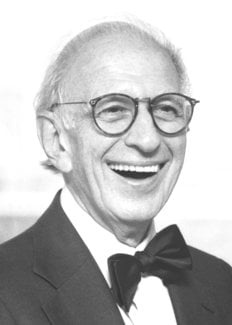
Remembering Eric Kandel
 |
| https://www.nobelprize.org/prizes/medicine/2000/kandel/biographical/ |
Eric Kendal has aimed to understand the human mind using biological concepts. He notes that the discovery of DNA's structure by James Watson and Francis Crick in 1953 has enhanced our understanding of biological aspects of perception, learning, memory, thought, consciousness, and free will. Consequently, biology has gained a status nearly on par with physics and chemistry. Molecular biology acts as the lens through which the mind's mysteries are explored. This has resulted in a new science of the mind founded on five principles: (1) the mind and brain are separable; (2) each mental function, whether creative or simple, is carried out by specialised neural circuits; (3) all these circuits are made up of the same basic signalling units—nerve cells; (4) these circuits use specific molecules to generate signals within and between nerve cells; and (5) these molecules have been conserved over thousands of years and are present in single-celled organisms like bacteria and yeasts, as well as in multicellular organisms such as worms, flies, and snails.
Eric Kendal, Austrian-American neurobiologist, was born on November 7, 1929.
From Kitchen to Classroom: The Art of Cooking and the Discipline of Food Studies

My earliest memory of cooking independently is from 2004, when I moved out of the MCC campus in Tambaram to a one-bedroom house near Camp Road. Besides the gastronomic freedom I sought from hostel food, it also prompted me to experiment with cooking. Without any technological support available today, I would call my mother for tips on making sambar and chicken curry. Cooking became an act of self-discovery. It helped me discover the amateur cook in me —a life skill I learned out of sheer necessity — that gave me tremendous confidence and courage. These lessons proved helpful when I left India for Libya in 2006 and later in Tumkur, where my colleagues appreciated my chicken saaru. Different regions demanded different approaches to cooking. For example, in Libya, rice was rare, so we had to plan our meals with long bread, olive products, tinned food, and vegetables. I got married while working in Oman, and the kitchen became a place to visit to check the salt and spiciness of the dishes. Even today, when time allows, I enjoy dabbling in cooking. Cooking has taught me one of the most valuable lessons: don’t wait for anyone else to cook for you; if you are skilled, do it for your own satisfaction. There is excellent fulfilment in preparing our own meals. We feel in control and find happiness throughout the process.
Cooking has also taught me to maintain order and discipline in the kitchen. It’s about knowing where to keep condiments and utensils. There are standard procedures to follow, and the results depend on them. I’ve heard that cleaning and washing dishes are the most challenging parts of cooking. Somehow, I find catharsis in the act of slowly cleaning the dishes—first with plain water, then with soap, and finally with lukewarm water. The last step is to dry the utensils with a cloth and store them on shelves. It is indeed a mindful activity. For me, washing dishes is also a time to reflect on the taste of the food and the cooking process involved. Today, cooking has become a trend, and many celebrity chefs have redefined it. YouTube videos have become a reliable resource for mastering cooking. Excessive interest in cooking has also led to food pornography, which is defined as the glorification or sensual presentation of food, especially in advertisements, social media, or cookbooks, where food is made to look irresistibly delicious. In Food Studies - A Hands-On Guide, Willa Zhen discusses the “foodie” culture and the pervasive food media in today’s world. She states that food functions as a significant form of cultural capital, representing knowledge, behaviours, and skills that demonstrate a person's cultural competence and social position.
Food studies, as an academic subject, is connected to anthropology. Franz Boas, the founding father of American anthropology, carefully documented how the Kwakiutl Native Americans in the Pacific Northwest harvested and handled salmon. Food studies involve extensive ethnographic fieldwork. Food is one of the most powerful carriers of memory — sensory, emotional, and cultural. Food Studies examine what and how we eat. Memory Studies explore what and how we remember. Joan Reardon, the noted American food writer, culinary historian, and editor, explains that food is a symbol, a product, a ritual object, an identity badge, an object of guilt, a political tool, and even a form of currency. Routledge International Handbook of Food Studies, edited by Ken Albala, is a good starting point for anyone interested in food studies.

Wednesday, 5 November 2025
Vandana Shiva, Wangari Maathai, and Saving India’s Forest Wealth

Vandana Shiva, born on November 5, 1952, was trained as a theoretical physicist. Before leaving for Canada to pursue her PhD in the foundations of quantum theory, she decided to visit the places from her childhood in the Himalayas. She was shocked to see that the forests and trees had disappeared, and oak trees had been cut down, with a rush to build dams and roads everywhere. She was traumatised but was able to recover from it when she joined the Chipko movement as a volunteer. Every time she visited India on holiday between 1974 and 1981, she became part of this movement in Tehri Garhwal, led by Sundarlal Bahuguna. It was in 1981 that the Indian government recognised the wisdom of the Chipko movement – the primary products of the forest are soil, water, and pure air, not timber, resin, and revenue. The government also banned logging in the Himalayas above one thousand metres. She was a child of the mountains, and it was the Chipko movement that awakened her ecological consciousness. With all humility, she declared that she studied ecology at Chipko University and that ordinary peasant women were her teachers.
Wangari Maathai, from Kenya, also recalled a childhood marked by extensive deforestation, like Vandana Shiva's. In her Nobel Lecture delivered in Oslo on December 10, 2004, she discussed these early experiences with nature. Her inspiration partly stems from her childhood observations of nature in rural Kenya. Her perspective has been shaped and enriched by her formal education across Kenya, the United States and Germany. Growing up, she saw forests being cleared and replaced by commercial plantations, leading to a loss of local biodiversity and impairing the forests' capacity to conserve water. She and her volunteers in the Green Belt Movement have planted more than 51 million trees. Like Vandana Shiva, she has emphasised the importance of women in addressing deforestation-related issues. She states that women are usually the first to become aware of environmental damage as resources become scarce, and they are unable to sustain their families.
Today’s Hindu featured an article about the Green India Mission (GIM), which aims to protect, restore, and enhance India’s forest cover as a key strategy to combat climate change and promote sustainable development. The authors, C.K. Mishra, former Secretary, Ministry of Health & Family Welfare, and Ministry of Environment, Forest and Climate Change, and Suryaprabha Sadasivan, Senior Vice President at Chase Advisors, recommend that India’s renewed Green India Mission aims to restore 25 million hectares of degraded land by 2030, linking forest growth with climate goals. The real challenge lies in ensuring ecological restoration that involves communities, local expertise, and site-specific planting. Forests, the article reminds us, are not just environmental assets but India’s future capital for resilience and sustainability.
As an academic deeply aware of the need to raise awareness about the importance of trees and climate change among faculty and students, I propose that universities and colleges take steps to develop campus forests within available space and work with local communities to raise awareness and partner with resident associations to plant more trees in the immediate neighbourhood of the campus. Let’s create more tree huggers than tree cutters.
References
https://www.nobelprize.org/prizes/peace/2004/maathai/lecture/
Shiva, Vandana. The Vandana Shiva Reader. Foreword by Wendell Berry, University Press of Kentucky, 2014.
Mishra, C. K., and Suryaprabha Sadasivan. “India’s Forests Hold the Future.” The Hindu, 5 Nov. 2025, https://www.thehindu.com.
Tuesday, 4 November 2025

Canva - Creativity Unlocked
Founded in Sydney, Australia, in 2013, Canva Pty Ltd has transformed from a simple design tool into a global creative powerhouse. Founded by Melanie Perkins, Cliff Obrecht, and Cameron Adams, Canva’s mission is clear and bold — “to empower everyone in the world to design anything and publish anywhere.” From its headquarters at 110 Kippax Street, Surry Hills, Canva continues to revolutionize visual communication and graphic design (SaaS), making creativity accessible to anyone, anywhere — no design degree required. A story of vision, innovation, and simplicity — Canva is not just a tool; it’s a movement empowering the imagination of millions. As of early 2025, Canva has around 220 million monthly active users. Its annual revenue is estimated at US $2.7 billion in 2024. By August 2025, Canva’s yearly recurring revenue was estimated at around US$3.3 billion. Its valuation reached approximately US$42 billion in 2025. Canva controls about 12-13% of the global graphics software market. India is now the 4th largest market for Canva, reflecting strong local adoption of its AI and design tools. Canva has announced plans to launch a native Hindi website and apps, indicating that localisation for Indian users is underway. The company has emphasised localising templates, content and features to suit India’s mobile-first, regional-language, creator-rich ecosystem. Last week (October 27 - November 2, 2025), Canva hosted a significant product launch event in Sydney on October 30, which served as the finale for its month-long Canva World Tour. Here are the key takeaways from the event.


Monday, 3 November 2025

Sunday, 2 November 2025

Monday, 27 October 2025
Drop by Drop and Step by Step - Lessons from Cyclone Montha

Continuous drizzle soaked our neighbourhood today due to Cyclonic Storm Montha, which was 500 km off the coast of Chennai. The name “Montha” was contributed by Thailand and, in Thai, means a “fragrant flower” or “beautiful flower”. As I walked to college this morning, I thought about the impact these little drops of water have on Earth. The steady drizzle has left the land wet and slushy. Remember, it is not torrential rain but a sustained, light shower. I was able to relate this to the steady, slow steps we can take in our lives to reach our goals.
I have come across many books that expound this philosophy of slow victory. ‘Bird by Bird’ by Anne Lamott is a good example. The author quotes her father’s advice to her brother when her brother was tense over the enormity of an academic task. “Bird by bird, buddy. Just take it bird by bird,” were the inspiring words. Tiny Experiments by Anne-Laure Cunff is another example. The quote “It’s about striving for sustainable excellence rather than fleeting perfection” resonates with the idea of how tiny drops can lead to a deluge. Recently, I watched the movie Holdover, in which the character played by Paul Giamatti, Paul Hunham, talks about his dream of writing a monograph about Carthage. At the end of the movie, he is gifted a book by Mary Lamb (played by Da'Vine Joy Randolph) to complete the project and add these words - “For your monograph. … That’s your problem, man. Just write one word after the other. How hard can that be?”
What can we learn from this drop-by-drop phenomenon of the rains induced by Montha?
Consistent action leads to sustainability – It is essential to practice your skills or develop a daily routine with habits to solidify your learning and goal-setting. Consistent actions will always yield results. Leo Tolstoy, in his War and Peace, wrote, “A man on a thousand-mile walk has to forget his goal and say to himself every morning, 'Today I'm going to cover twenty-five miles and then rest up and sleep.” The quote highlights the importance of focusing on each day individually to manage a long journey or task, rather than fixating on the distant goal. 'Rome was not built in a day' is a proverb that is relevant here. The one lesson I try to impart to my students is that good things take time. Instant gratification is a myth fuelled by social media interactions. I also tell them that a strong foundation is necessary for things to stand. Patience is a virtue, especially in relationships and success.
Cyclone Montha will make landfall near Kakinada, Andhra Pradesh, tomorrow. The cyclone's activity, which inspired me to write this blog, will be remembered even after its gradual demise somewhere over land in the coming days.
Friday, 24 October 2025
The Beauty and the Beast

(Image Courtesy - The Hindu)

(Image Courtesy - The Hindu)
October is the month of festivals, and the most prominent one is Deepavali or Diwali. The festival of lights is also a celebration of sweets and crackers. As a child, I eagerly awaited the Diwali sweets, sold in a cardboard box adorned with festive designs. Inside, there were sweets of various colours, Mysore Pak, and, besides the usual yellow ones, differently coloured laddus. In those days, Deepavali celebrations were more focused on lights rather than crackers. Light-based festivities were always peaceful and visually appealing. Over the years, the manner of celebration changed. Crackers became an essential part of the festivities. Living in an Indian state that is a major producer of firecrackers, a Deepavali without them seems unthinkable. Sivakasi district in Tamil Nadu produces nearly 90% of the firecrackers sold nationwide.
Additionally, there are illegal cracker-making units in the state, often called country-made firework units, which flout safety measures and sometimes employ minors. The public, unaware of the health risks, buys these crackers. One such incident occurred in Avadi on October 20, 2025, where four people died in an explosion at a house storing country-made firecrackers. Handling explosives is inherently risky. Firecracker factories should possess valid licenses and follow safety procedures, such as having fire extinguishers and trained staff.
Like any festival, Deepavali should be celebrated with respect for its core philosophy—the triumph of light over darkness and the victory of good over evil. The festival is also linked to the well-being of the universe. Light symbolises knowledge and wisdom. Doing good to others and the world around us is at the heart of the festival. As inhabitants of this planet, we share a responsibility to keep it unspoiled for future generations. Efforts to reduce pollution through eco-friendly green crackers have not been widespread, partly due to a lack of awareness among sellers and residents. It is challenging to verify green crackers, as they often lack official logos and QR codes for authenticity. Developed by CSIR-NEERI in 2018, these crackers aim to cut air and noise pollution, contain no harmful chemicals, and produce less particulate matter. However, shopkeepers are often reluctant to promote them. Experts argue that bursting green crackers does not truly benefit the environment, as they also emit ultra-fine particles that can penetrate the lungs and bloodstream.
On October 20th at 8 pm, we were travelling from Chennai Central to our home in Avadi. The streets were filled with Chennaites celebrating Diwali. Some of them were bursting crackers right in the middle of the road. The cab driver had to manoeuvre the vehicle through this crowd and keep a close eye on the smog-filled roads. It was sad to see people riding motorbikes through these streets without masks or facial protection. Some of them had infants and young children with them. These sights are fine examples of how the festival frenzy blinded public wisdom. More than 100 people were hospitalised in Bhopal due to injuries after using calcium carbide guns during Deepavali. The so-called "carbide gun" or "desi firecracker gun" has become a nightmare for parents and doctors. In just three days, more than 122 children across Madhya Pradesh have been admitted to hospitals with severe eye injuries, while 14 have lost their eyesight.
Delhi ranks among the world's most polluted cities. Data analysts and pollution monitors focus closely on air quality and noise levels during Deepavali night and the following day. Creating policies to control pollution is one task, but their implementation is another. A report by the Comptroller and Auditor General (CAG) has highlighted several issues, including missing data. Monitoring sensors are often placed under tree cover, behind walls or other obstructions, or in less-polluted areas. In worst cases, the equipment was turned off overnight. Officially, authorities deny significant pollution, yet Delhi residents with asthma report serious health problems. The city faces multiple climate-related issues, including stubble burning, vehicle emissions, and industrial pollution, compounded by vehicle restrictions. Regarding noise pollution monitoring, technology has become a spectacle. Real-time data from sensors must be taken seriously and not lost within bureaucratic and political complexities.
Thursday, 9 October 2025
).png)
Wednesday, 8 October 2025

Tuesday, 7 October 2025


Subscribe to:
Posts (Atom)